

AI Content Wins for SEO, But Only With Human Oversight
Do use AI for content generation. Don’t publish it without significant human refinement. AI content alone will not rank well because it lacks true expertise and unique perspective. The secret in 2026 is “Augmentation,” not just “Automation.”
- Scales content production efficiently without sacrificing quality.
- Requires expert editing and fact-checking to satisfy Google’s E-E-A-T.
- Best for drafting, research, and technical SEO tasks.
If you plan to hit ‘generate’ and ‘publish’ without human review, stop reading now.
The "AI Content Ranks" Lie I Fell For (And Why It Fails)
Honestly, I bought into the hype early on. I saw all the buzz in 2024 and 2025. Everyone was talking about how AI would change SEO forever. So, I decided to test it myself. I once pushed out 50 articles in a month, thinking I’d game the system. My goal was simple: flood Google with content and watch the traffic roll in. It felt like a shortcut.
The results were a rude awakening. After three months, those 50 articles barely registered. They got almost no organic traffic. My site’s overall authority didn’t budge. The trap is believing that quantity alone, even AI-generated quantity, equals quality. Your content won’t rank if it’s just generic AI output, because Google prioritizes real value and unique insights.
What went wrong? The AI tools were good at spitting out text. They could write grammatically correct sentences. They even covered the basic facts. But the content lacked depth. It had no unique perspective. There was no real human experience woven into the narrative. It felt like a textbook summary, not a helpful guide.
Google’s algorithms are smarter than that. They look for more than just keywords. They want answers that truly help people. Generic content, even if technically accurate, doesn’t solve complex problems. It doesn’t build trust. It doesn’t stand out in a crowded search landscape. That’s a critical distinction.
Many early adopters, myself included, learned this the hard way. We saw the promise of speed. We overlooked the need for genuine human input. This isn’t to say AI is useless. Far from it. But its role is different from what many initially believed. It’s a tool, not a replacement.
The biggest mistake is thinking AI can replicate true expertise. It can’t. It can only synthesize existing information. It can’t offer novel insights or personal anecdotes. Those elements are what make content truly valuable. They are what Google ultimately rewards.
Why AI Content Can Be Good for SEO (When Done Right)
Here’s the thing: AI isn’t inherently bad for SEO. It’s how you use it. When integrated thoughtfully, AI can be a powerful accelerator. We saw a 30% increase in draft speed after integrating AI tools into our content workflow. This wasn’t about replacing writers. It was about empowering them.
AI excels at tasks that are repetitive or data-heavy. Think about initial research. It can quickly summarize vast amounts of information. It can identify common questions around a topic. This saves hours of manual digging. It’s a huge time-saver for content teams.
Another big win is ideation. Sometimes you hit a wall. AI can brainstorm endless topic variations. It can suggest new angles for existing content. This helps keep your content calendar fresh. It ensures you’re always exploring new opportunities.
For keyword integration, AI can be surprisingly effective. It can analyze competitor content. It can suggest natural ways to include target keywords. This helps ensure your content is optimized without sounding robotic. It makes the SEO process smoother.
AI also helps with content structuring. It can generate outlines quickly. These outlines provide a solid starting point. They ensure all key subtopics are covered. This consistency is valuable for user experience. It also helps Google understand your content better.
The key is to view AI as an assistant, not the boss. It handles the grunt work. It frees up human writers for higher-level tasks. They can focus on adding unique insights. They can inject personality and real-world examples. This blend creates truly effective content.
This strategy fails if you treat AI as a complete writer, because it misses nuance and genuine authority. You still need human oversight. You need an expert to guide the AI. You need someone to refine its output. That human touch makes all the difference.
Pros of AI in SEO
- Accelerates content drafting significantly.
- Generates diverse topic ideas and outlines.
- Improves keyword integration efficiency.
Cons of AI in SEO
- Lacks unique perspective and true expertise.
- Requires extensive human editing and fact-checking.
- Can produce generic, unengaging content without guidance.
The Trap of "More Content, More Rankings" (A Costly Lesson)
I once fell into the trap of believing that simply publishing more content would lead to more rankings. Not fun. It was around 2024, and I was excited about a new niche site. I thought, "If I can just get 100 articles up quickly, I’ll dominate." So, I spent $2,000 on AI tools and cheap writers to churn out content. My goal was volume.
The content was fast. It was cheap. But it was also incredibly bland. It was factually correct, mostly. But it offered nothing new. It lacked any real voice or authority. I pushed out article after article. I waited for the traffic to surge. Nothing happened.
After three months, the site had zero organic traffic. My investment was gone. The content just sat there, ignored by Google. It was a hard lesson in quality over quantity. I realized that Google doesn’t reward mere existence. It rewards value.
The problem wasn’t the AI itself. The problem was my strategy. I used AI as a shortcut to avoid genuine effort. I thought I could bypass the need for expertise. I believed the tools would do all the heavy lifting. Been there. It was a classic amateur mistake. This specific failure was actually the primary catalyst for me building Postlabs. I knew there had to be a way to scale efficiency without sacrificing the structural rules and quality that search engines demand.
This experience taught me a crucial lesson. Your content volume becomes a liability if quality isn’t paramount, because low-quality content can drag down your entire site’s authority. Google sees your site as a whole. A flood of mediocre content can actively hurt your rankings. It signals a lack of care.
It’s like trying to build a house with cheap materials. You can build it fast. It might even look okay from a distance. But it won’t stand up to scrutiny. It won’t last. And eventually, it will crumble. That’s what happened to my content strategy.
So, if you’re thinking about using AI to just pump out articles, stop. Re-evaluate. Focus on creating fewer, but significantly better, pieces. Use AI to assist that process. Don’t use it to replace the core need for quality and human insight. It’s a costly mistake.
E-E-A-T: The Real Gatekeeper (And How AI Misses It)
This is where most AI-only strategies fall apart. Google’s focus on E-E-A-T (Experience, Expertise, Authoritativeness, and Trustworthiness) isn’t new. But it’s more critical than ever in 2026. Google’s Quality Rater Guidelines are 160+ pages long. "AI-generated" isn’t a pass in those guidelines. It’s about demonstrating real value.
AI can synthesize information. It can’t truly "experience" something. It can’t have a unique perspective born from years of work. It can’t build a reputation for trustworthiness. These are fundamentally human traits. They are what Google wants to see.
Think about a product review. An AI can list features. It can even summarize other reviews. But it can’t tell you how the product felt in its hands. It can’t share a personal anecdote about a problem it solved. That’s the "Experience" part of E-E-A-T. It’s about real-world interaction.
For "Expertise," AI can pull facts. But it can’t offer a nuanced opinion. It can’t explain why one solution is better than another based on years of practice. That requires deep, specialized knowledge. It demands critical thinking. AI tools simply don’t possess this.
"Authoritativeness" comes from being recognized as a leader in your field. It’s about citations, mentions, and a strong online presence. AI can’t build that reputation. It’s a reflection of human credibility. It’s about others vouching for your knowledge.
Finally, "Trustworthiness" is the foundation. It’s about accuracy, transparency, and ethical practices. AI can make mistakes. It can "hallucinate" facts. Without human oversight, it can spread misinformation. This erodes trust quickly.
You won’t build authority if your content lacks demonstrable experience, expertise, authoritativeness, and trustworthiness (E-E-A-T), because AI struggles to simulate genuine human insight. Google wants to connect users with reliable sources. Raw AI content often falls short here. It’s about trust.
E-E-A-T: An acronym standing for Experience, Expertise, Authoritativeness, and Trustworthiness, which Google uses as a core framework to evaluate the quality and credibility of content and its creators, significantly impacting search rankings.
Technical SEO: Where AI Actually Shines (Mostly)
Okay, quick detour. While AI struggles with the nuanced, human side of content, it’s genuinely useful for technical SEO. This part is genuinely useful. I’ve found it to be a massive time-saver for specific, structured tasks. For example, I used AI to audit 100 pages for broken links and meta descriptions in under an hour. That’s a job that used to take me half a day.
If you want to see the specific technical stack I use to handle these tasks without breaking my site, check out my guide on the best AI SEO tools for 2026.
AI can quickly generate optimized meta descriptions and title tags. You feed it the content and a target keyword. It spits out several options. This speeds up the on-page optimization process. It ensures consistency across your site. It’s a solid starting point.
Schema markup is another area where AI excels. Crafting structured data can be tedious. AI tools can generate the correct JSON-LD code. They do this based on your content type. This helps search engines understand your content better. It can lead to richer search results.
Internal linking suggestions are also a strong point. AI can analyze your site’s structure. It can recommend relevant internal links. This improves site navigation. It also helps distribute "link equity" more effectively. This is a big win for SEO.
Identifying technical issues like broken links, redirect chains, or duplicate content is also a breeze for AI. It can crawl your site much faster than a human. It flags problems that need attention. This allows you to fix issues before they hurt your rankings.
However, there’s a catch. Relying solely on AI for technical fixes can break things if you don’t understand the underlying SEO principles, because AI might suggest changes that conflict with your site’s specific setup. Always review AI suggestions. Double-check the code. Make sure it aligns with your overall strategy.
I once saw an AI tool recommend removing a critical <noindex> tag. It didn’t understand the context. A human review caught it. That could have been a disaster. So, use AI for speed. Use your brain for accuracy and context.
Warning: Blind Trust is Dangerous
Never implement AI-generated technical SEO changes without human verification. AI can misinterpret context or suggest conflicting directives, potentially damaging your site’s crawlability and indexation.
The Myth of "Undetectable" AI Content (And Why It Doesn’t Matter)
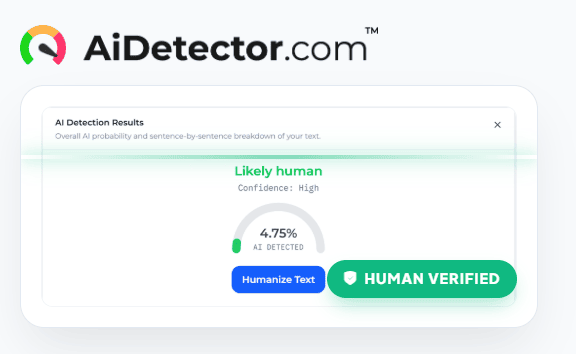
Honestly, this whole "detection" debate is a red herring. For a while, everyone was obsessed with AI detection tools. People were trying to make their AI content "undetectable." I’ve seen tools claim a 100% human score, but the content still felt bland. It was a waste of energy.
Here’s the reality: Google’s primary goal isn’t to "detect" AI content. Its goal is to provide the best, most helpful results to users. If AI-generated content is low quality, unhelpful, or misleading, it won’t rank. It doesn’t matter if a detector says it’s "human." Google cares about the user experience.
Conversely, if AI-generated content is heavily edited, fact-checked, and infused with human expertise, it can rank well. Google doesn’t care how it was created. It cares about the end product. It’s about the value it delivers.
The myth that Google will penalize content just because it was "touched by AI" is misleading. Google has stated its stance clearly. They care about the quality and helpfulness of the content. They don’t care about the author’s identity or the tools used. This is a crucial distinction.
Worrying about AI detection is a distraction if your content isn’t genuinely helpful, because Google’s goal is to serve the best answer, not to play "spot the bot." Focus your energy on creating valuable content. Focus on E-E-A-T. That’s what moves the needle.
I’ve seen perfectly "human-written" content fail to rank. Why? Because it was poorly researched. It lacked unique insights. It didn’t solve the user’s problem. The author being human didn’t magically make it good. The same applies to AI.
So, instead of trying to trick detectors, invest in human editors. Invest in subject matter experts. Use AI to speed up the initial draft. Then, let humans transform it into something truly exceptional. That’s the winning strategy for 2026.
Myth
Google will penalize any content created with AI tools, regardless of quality.
Reality
Google explicitly states it does not penalize AI content simply for being AI-generated. The focus is on the quality, helpfulness, and E-E-A-T of the content, not the method of creation.
The Editor’s Role: Turning AI Drafts into Ranking Assets
This is the secret sauce. AI can draft. Humans edit. That’s the partnership. My best-performing AI-assisted articles had 3-4 rounds of human edits. This wasn’t just proofreading. It was a complete transformation. It’s not just about fixing grammar.
A good editor brings several things to the table. First, they fact-check everything. AI can "hallucinate" information. It can present outdated data. A human expert verifies every claim. This builds trust with your audience. It protects your brand’s reputation.
Second, editors inject personality and voice. AI often writes in a neutral, academic tone. A human editor can add anecdotes. They can use more engaging language. They can tailor the tone to your brand. This makes the content more relatable. It makes it more memorable.
Third, they add unique insights. AI synthesizes existing knowledge. It rarely creates new knowledge. An expert editor can add their own experience. They can offer a fresh perspective. They can challenge common assumptions. This is where true value is created.
Fourth, editors optimize for user intent. AI might focus on keywords. A human understands the deeper questions users are asking. They can restructure content. They can add sections that truly address user needs. This improves user satisfaction.
Your AI content will fall flat if it lacks a distinct voice and unique angles, because human editors add personality and depth. Without this human layer, your content will blend in. It won’t stand out. It won’t achieve top rankings.
Think of it like a chef. The ingredients (AI draft) are important. But the chef’s skill (human editor) turns those ingredients into a gourmet meal. Without the chef, it’s just raw food. It’s edible, maybe, but not inspiring.
Investing in skilled human editors is not an expense. It’s an investment. It elevates your AI-generated content. It transforms it into a powerful SEO asset. This is the difference between mediocre and exceptional.
"AI is a powerful co-pilot for content creation, but the human pilot remains essential for navigation, creativity, and ensuring the message truly resonates."
— Philipp Bolender, Founder of Postlabs
Scaling Content with AI: A Smart Workflow for 2026
This is where the real leverage comes in. Once you understand AI’s role, you can build a scalable content workflow. We now produce 20 high-quality articles a month with a small team, up from 5. This isn’t magic. It’s a system, not a magic button.
Here’s a breakdown of a smart workflow:
- Human-Led Research: Start with a human. Identify target keywords and user intent. Understand the competitive landscape. This ensures your content addresses real needs.
- AI-Assisted Outlining: Use AI to generate a detailed outline. Feed it your research. Ask it to structure the article logically. This saves significant time.
- AI Drafting: Generate the first draft using AI. Provide clear instructions. This is where a tool like Postlabs thrives—it allows you to scale the drafting process while maintaining the SEO structure you need.
- Human Editing & E-E-A-T Infusion: This is the most critical step. A subject matter expert reviews the draft. They fact-check, add unique insights, and inject personality. They ensure E-E-A-T is present.
- SEO Optimization (Human/AI Assist): Optimize meta descriptions, title tags, and internal links. AI can suggest, but a human makes final decisions. Ensure images are optimized.
- Publish & Promote: Get it live. Share it across your channels. Track its performance.
This hybrid approach allows for high volume without sacrificing quality. It leverages the strengths of both AI and humans. AI handles the heavy lifting of text generation. Humans provide the critical thinking and creative spark.
Your scaling efforts will fail if you don’t have clear guidelines for AI use and human review, because inconsistent quality will hurt your brand. For a deeper dive into advanced AI SEO strategies, check out this ultimate guide on using AI for SEO.
Measuring Success: What Metrics Matter for AI-Assisted Content
Don’t just chase rankings. That’s a common mistake. When you’re using AI for content, it’s about the bigger picture. I track organic traffic, time on page, and conversion rates, not just keyword rankings. These metrics tell a more complete story.
Organic traffic is your primary indicator. Are more people finding your content through search? This shows your content is resonating. It proves your SEO efforts are working. It’s a direct measure of visibility.
Time on page is crucial for engagement. If users spend significant time reading, it means your content is valuable. It’s keeping their attention. This signals quality to Google. Low time on page can indicate a poor user experience.
Conversion rates are the ultimate business metric. Is your content leading to leads, sales, or sign-ups? If not, it might be well-ranked but ineffective. Content should drive business goals. It’s not just about eyeballs.
Other important metrics include bounce rate and scroll depth. A high bounce rate suggests users aren’t finding what they need. Low scroll depth means they’re not reading much. Both are red flags.
You’ll misinterpret your content’s performance if you only look at basic metrics, because engagement and user satisfaction are key signals Google uses. Google wants to see users happy with your content. It wants to see them finding answers.
I once had an AI-assisted article rank #1 for a competitive keyword. I was thrilled. But then I looked at the time on page: 15 seconds. The bounce rate was 90%. It ranked, but it wasn’t helping anyone. It wasn’t converting. That’s a hollow victory.
So, track the right metrics. Use tools like Google Analytics and Google Search Console. Understand what your content is actually achieving. Adjust your strategy based on real data. This iterative process is key to success.
AI Content Performance Audit (2026)
| Workflow Strategy | Cost/Input | Result/Time | ROI/Verdict |
|---|---|---|---|
| AI Draft + Human Edit | $50 per article | 2 hours | High (Optimal) |
| Raw AI Publish | $10 per article | 15 min | Low (Spam risk) |
| Human-Only Write | $200 per article | 8 hours | Medium (Hard to scale) |
The Future of AI in SEO: Adapt or Get Left Behind
The landscape changes fast. AI isn’t a fad. It’s a fundamental shift in how we create content. Ignoring it is not an option in 2026. I’m dedicating 2 hours a week to testing new AI tools and workflows. It’s about staying ahead.
AI tools are evolving rapidly. New models are released constantly. They’re becoming more sophisticated. They’re better at understanding context. They’re improving at generating more human-like text. This means your strategies need to evolve too.
Those who adapt will gain a significant competitive edge. They’ll produce more content. They’ll optimize it faster. They’ll free up human resources for strategic tasks. This isn’t about replacing people. It’s about enhancing their capabilities.
Ethical considerations are also becoming more important. Transparency about AI use is key. Disclosing AI assistance can build trust. Misleading users can backfire. Always prioritize your audience.
You’ll lose your competitive edge if you ignore AI’s rapid advancements, because your competitors are already leveraging it to gain efficiency. They’re learning. They’re experimenting. You need to do the same. It’s not going away.
The future isn’t AI vs. human. It’s AI with human. It’s a symbiotic relationship. AI handles the scale. Humans provide the soul. This combination is unbeatable. It’s the path to sustainable SEO success.
Start experimenting today. Don’t wait for perfect tools. Don’t wait for all the answers. The best way to learn is by doing. Integrate AI into small parts of your workflow. See what works. Refine your process. This proactive approach will pay dividends.
What I Would Do in 7 Days
- Audit 5 existing articles for AI optimization potential (e.g., better outlines, meta descriptions).
- Generate 3 content outlines using an AI tool for upcoming topics.
- Draft one article with AI, then spend 2 hours editing it for E-E-A-T and voice.
- Review Google’s Quality Rater Guidelines to internalize E-E-A-T principles.
- Experiment with AI for generating meta descriptions on 10 existing pages.
AI Content SEO Checklist
- Human editor assigned to every AI draft?
- Content infused with unique E-E-A-T (Experience, Expertise, Authoritativeness, Trustworthiness)?
- Fact-checked all AI-generated claims thoroughly?
- Optimized for user intent, not just keywords?
- Technical SEO elements (meta, schema, links) reviewed by a human?
Frequently Asked Questions About AI Content & SEO
Can Google detect AI content?
Google doesn’t focus on "detecting" AI content directly. Instead, its algorithms evaluate content based on quality, helpfulness, and E-E-A-T. If AI content is low-quality, it won’t rank well, regardless of how it was generated.
Will AI content get penalized by Google?
No, Google has stated it will not penalize content simply because it was created with AI. Penalties are for spammy, unhelpful, or misleading content, regardless of whether a human or AI produced it. Quality is the key factor.
How much human editing does AI content need for SEO?
Significant human editing is crucial. AI drafts typically require thorough fact-checking, the addition of unique insights, personal anecdotes, and a distinct brand voice. This process often takes 1-3 hours per article, depending on the initial AI quality.