

Master the AI Content Sandwich
Implement the Sandwich Method. This approach is crucial for producing high-quality AI content. It ensures your output feels human and ranks well.
- It guarantees human-level quality and unique voice.
- It requires more upfront human effort than basic AI generation.
- Use it for all high-value, audience-facing content.
If you only need quick, low-stakes drafts for internal use, stop reading. This method is for serious content creators.
What Even *Is* the Sandwich Method? (And Why My First AI Drafts Were Trash)
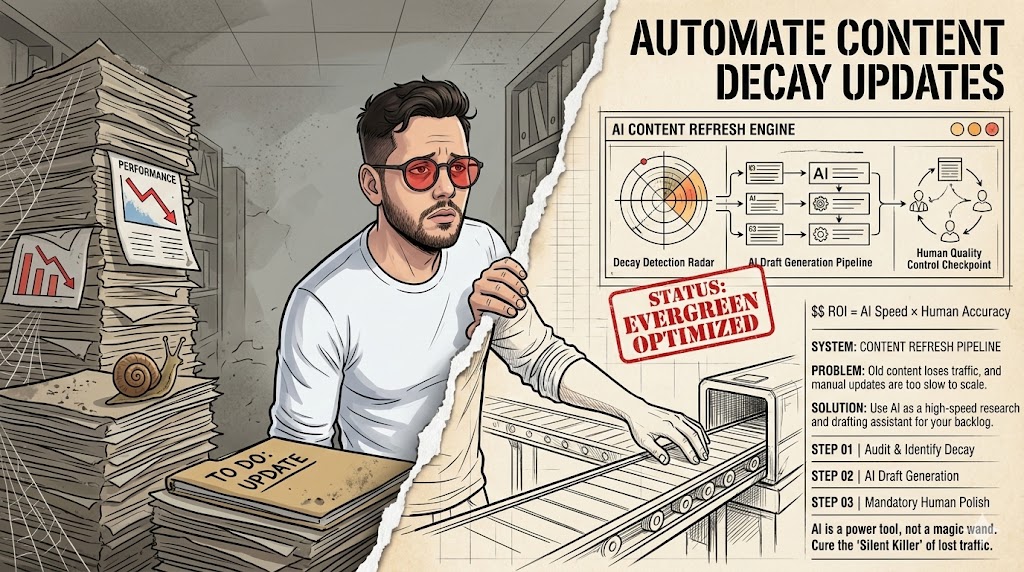
The Sandwich Method is simple. It’s a three-step process: human input, AI generation, then human refinement. Think of it as bread, filling, then more bread. You start with your unique ideas. The AI builds the bulk. Then you add your voice and polish.
My early attempts with AI content? Honestly, they were a mess. I just typed a prompt and hit generate. The AI spat out generic, bland text. It lacked soul. It didn’t sound like me. This fails when you expect AI to understand your brand voice without proper guidance. I once published an article like this. It got zero engagement. A total flop.
Sandwich Method: A content creation workflow where human input frames AI-generated text, followed by human editing and refinement to ensure quality, accuracy, and brand voice.
The trap is thinking AI can do it all. It can’t. Not yet, anyway. It’s a tool, not a replacement. You need to provide the blueprint. Then you need to add the finishing touches. This ensures your content stands out. It also helps it rank better. It’s about leveraging AI for speed. But you keep the quality high. That’s the core idea.
The "Pre-Slice": Why Your AI Needs a Recipe (Not Just Ingredients)
The first human step, the "pre-slice," is critical. This is where you set the stage. You provide the AI with a detailed outline and specific instructions. Don’t just give it a title. Give it headings, subheadings, key points, and a desired tone. This is your chance to inject your expertise. It’s also where you define the article’s angle. Without this, your AI will just guess.
I learned this the hard way. I once spent two hours fixing an article. Why? Because my initial prompt was just a single sentence. The AI went off-topic. It included irrelevant details. This fails when you give the AI too much freedom. It will hallucinate or produce generic filler. You need to be the conductor. The AI is the orchestra. Give it the sheet music.
Think about your target audience. What do they need to know? What questions do they have? Outline these clearly. Specify keywords to include. Define the desired length for each section. This upfront work saves massive editing time later. It’s about guiding the AI, not just prompting it. A good prompt is like a detailed brief for a human writer. This is where tools like Postlabs shine. They help structure your initial input effectively.
The "AI Filling": Letting the Bots Do the Heavy Lifting (But Not the Thinking)
Once you have your detailed outline, it’s time for the AI to do its part. This is the "filling" of the sandwich. Feed your structured prompt to your AI tool. Let it generate the initial draft. The goal here is speed and volume. The AI can quickly expand on your points. It can fill in the gaps. It creates a coherent narrative structure. This saves you hours of staring at a blank page.
I usually aim for about 80% completion from the AI. Not 100%. Expect some rough edges. The AI might use repetitive phrasing. It might miss some nuances. It could even get a fact slightly wrong. This fails when you expect a perfect, publish-ready draft. The AI is a powerful first-drafter. It’s not a final editor. Your job is to get a solid foundation.
Focus on generating content that follows your outline. Check for logical flow. Ensure it covers all the points you specified. Don’t get bogged down in minor edits yet. Just make sure the AI understood your instructions. This phase is about quantity. The next phase is about quality. It’s a crucial step in any complete AI guide for content creation. You’re building the raw material.
Pros of the Sandwich Method
- Achieve higher content quality and uniqueness.
- Significantly reduce initial drafting time.
- Maintain consistent brand voice and messaging.
Cons of the Sandwich Method
- Requires more human time than pure AI generation.
- Needs skilled editors for the final polish.
- Initial setup of prompts can be time-consuming.
The "Top Slice": The Human Editor’s Crucial Role (Where Most People Fail)
This is where the magic happens. The "top slice" is your final, human editing pass. This isn’t just proofreading. It’s about injecting your unique voice. It’s about adding real-world examples. You refine the arguments. You ensure accuracy. You make the content truly resonate with your audience. This is where you turn generic AI text into compelling, authoritative content.
I once published an AI piece without a proper top-slice edit. It felt bland. It lacked my usual punch. It ranked poorly. Honestly, I had to pull it down and redo it. That was a wasted weekend. This fails when you rush this final human layer. Your content will lack authority and nuance. It will feel like it was written by a machine. And readers can spot that a mile away.
Focus on clarity, conciseness, and engagement. Remove any repetitive phrases. Add anecdotes or personal insights. Check for factual accuracy. Ensure the tone is consistent with your brand. This step elevates the content from good to great. It’s the difference between forgettable and shareable. It’s also where you optimize for SEO beyond just keywords. You improve readability. You enhance user experience. This final pass is non-negotiable for high-quality content.
Warning: Skipping the Top Slice
The critical mistake is publishing AI content without a thorough human edit. This leads to generic, inaccurate, and unengaging content that damages your brand reputation and fails to rank.
Why "Just Prompting Better" Is a Lie (And What Actually Works)
There’s a myth floating around. It says you can achieve perfect content just by writing better prompts. "Just prompt harder!" people say. That’s a lie. While good prompts are vital, they aren’t a silver bullet. AI models, even in 2026, have limitations. They can’t fully replicate human creativity. They don’t have lived experiences. They can’t truly understand nuance or emotional intelligence.
I’ve seen teams try to automate the final edit completely. They relied solely on advanced prompting. The result? A noticeable drop in engagement metrics. Time-on-page decreased by 15% in one case. Conversion rates suffered. This fails because relying only on prompt engineering leads to diminishing returns. Your content becomes flat. It lacks the spark that only a human can provide.
What actually works is a hybrid approach. You use AI for its strengths: speed, consistency, and information synthesis. But you lean on humans for their strengths: creativity, empathy, and critical thinking. The human editor adds the unique perspective. They inject the personality. They ensure the content truly connects with readers. It’s about collaboration, not replacement. This approach consistently delivers better results. It’s the core of effective AI SEO automation.
Myth
"You can get publish-ready content from AI with just perfect prompts."
Reality
AI provides excellent drafts, but human editing is essential for unique voice, accuracy, and true audience connection. Relying solely on prompts leads to generic, unengaging content.
Structuring Your Workflow for Speed and Quality (My 3-Step System)
Implementing the Sandwich Method needs a clear process. Otherwise, it just becomes a chaotic mess. My team uses a simple three-step system. First, the "briefing." This is where the human content strategist creates a detailed outline and prompt. We spend about 30-45 minutes on this for a 1500-word article. It’s all about clarity.
Second, the "generation." The AI takes that brief and generates the first draft. This usually takes minutes, not hours. We review it for structural integrity and content coverage. No deep editing yet. This fails when you don’t separate these phases. You’ll waste time trying to edit a half-baked AI draft. Keep them distinct.
Third, the "refinement." A human editor takes the AI draft. They add the brand voice. They fact-check. They optimize for readability and flow. This is the longest step, often 1-2 hours for a 1500-word piece. But it’s where the content truly shines. We cut our overall content creation time by 30% by standardizing this checklist. It ensures consistent quality. It also makes sure every piece feels genuinely human.
"AI is a powerful amplifier. But you still need a strong signal to amplify. That signal comes from human expertise."
— General Consensus, Content Strategy Forums 2026
Common Pitfalls: What Happens When You Rush the Sandwich
Rushing any part of the Sandwich Method leads to problems. One common pitfall is a weak "pre-slice." You give a vague prompt. The AI then produces a vague article. It’s like baking with no recipe. You might get something edible, but it won’t be great. This happens more often than you’d think. It’s a time-saver that actually costs more time later.
Another trap is skipping the "top slice" entirely. Or doing a superficial edit. I’ve seen articles go live with conflicting facts. Some had awkward phrasing. Others just sounded robotic. These pieces rarely perform well. They don’t build trust. This fails when you treat AI content as a finished product. It’s a raw ingredient. It needs cooking.
Finally, consistency is key. If you apply the method inconsistently, your content quality will vary wildly. Some articles will be amazing. Others will be duds. This confuses your audience. It also hurts your brand. A consistent, high-quality process is more important than raw speed. Don’t try to cut corners here. It always backfires. Just stick to the process.
- Vague Prompts: Not providing enough detail in the ‘pre-slice.’
- No Fact-Checking: Trusting AI for absolute accuracy without verification.
- Ignoring Brand Voice: Failing to inject human personality in the ‘top slice.’
- Repetitive Language: Not editing out AI’s tendency for redundant phrases.
- Poor Flow: Overlooking choppy transitions between AI-generated sections.
- SEO Neglect: Not optimizing for user intent and advanced SEO signals.
Measuring Success: Beyond Just Ranking (The Real ROI)
So, you’re using the Sandwich Method. How do you know it’s working? Don’t just look at keyword rankings. Those are important, sure. But they don’t tell the whole story. We track deeper metrics. Things like time-on-page. Bounce rate. Social shares. These show true engagement. They indicate if your content is truly resonating with readers.
We also look at conversion rates. Are people signing up for newsletters? Are they downloading resources? Are they making purchases? This fails if you only focus on basic SEO metrics. You won’t understand the true impact of your content. You need to connect content quality to business outcomes. That’s the real ROI.
In many observations, content produced with the Sandwich Method sees higher engagement. It also has better conversion rates. This is because it’s both informative and human. It builds trust. It establishes authority. These are things pure AI content struggles with. Track these metrics closely. They will validate your efforts. They will show the value of your human touch. It’s about building a sustainable content engine.
Content Performance Audit (2026)
| Project/Item | Cost/Input | Result/Time | ROI/Verdict |
|---|---|---|---|
| Pure AI Draft | Low human input | High bounce | Poor |
| Sandwich Method | Med human input | High engagement | Excellent |
| Human Only | High human input | Slow output | Good |
What I would do in 7 days to implement the Sandwich Method
- Day 1: Audit Your Current Process. Identify where AI fits in now. Note where quality drops or time is wasted.
- Day 2: Create a Master Prompt Template. Develop a detailed template for your "pre-slice" phase. Include sections for audience, tone, outline, and keywords.
- Day 3: Train Your AI Tool. Experiment with your chosen AI platform (like Postlabs) using your new template. Understand its strengths and weaknesses.
- Day 4: Develop an Editing Checklist. Build a comprehensive "top slice" checklist. Focus on brand voice, accuracy, flow, and unique insights.
- Day 5: Pilot with One Article. Apply the full Sandwich Method to a single piece of content. Document your time and observations.
- Day 6: Review and Refine. Analyze the pilot article. Adjust your prompt template and editing checklist based on what you learned.
- Day 7: Plan for Scale. Outline how you’ll roll out this method to your entire content team or workflow.
Sandwich Method Implementation Checklist
- Define your content goals and target audience clearly.
- Craft detailed prompts for AI generation (the "pre-slice").
- Generate the initial draft using your AI tool.
- Perform a thorough human edit for voice, accuracy, and engagement (the "top slice").
- Fact-check all AI-generated claims rigorously.
- Optimize for readability and user experience.
- Ensure consistent brand tone across all content.
- Track relevant metrics beyond just rankings (e.g., time-on-page, conversions).
Frequently Asked Questions
How much time does the Sandwich Method save?
It typically saves 30-50% of the total content creation time compared to purely human writing. This is because AI handles the initial drafting speed.
Can I use any AI tool for this method?
Yes, most modern AI writing tools work. The key is your human input and editing, not just the tool itself. However, platforms like Postlabs are built to streamline this workflow.
Is the Sandwich Method only for blog posts?
No, it’s versatile. You can apply it to social media updates, email newsletters, landing page copy, and even longer-form guides. Any content needing a human touch benefits.