

Go All-In on AI-Friendly Content.
Do this. Don’t treat Perplexity like traditional search. If you aim for Perplexity citations, you must fundamentally shift your content strategy to serve AI models directly.
- Focus on precise, factual answers and structured data.
- Requires deep niche authority, not broad keyword stuffing.
- High effort for potentially high visibility in AI summaries.
If your brand lacks genuine expertise or isn’t ready to invest in hyper-specific content, stop reading; this won’t work for you.
Why Perplexity Citations Matter
- Direct Visibility: Your brand appears as a primary source in AI answers.
- Authority Building: Establishes your site as a trusted expert for AI models.
- Future-Proofing: Positions you for the evolving AI search landscape.
The Real Hurdles
- High Content Cost: Requires extremely precise, well-researched content.
- No Guarantees: AI citation is not a direct, controllable output.
- Niche Focus: Broad topics are harder to dominate for citations.
The Perplexity AI Trap: Why Generic SEO Fails
I’ve seen too many brands try to optimize for Perplexity AI like it’s just another Google update. Honestly, that’s a huge mistake. Perplexity isn’t a search engine in the traditional sense; it’s a research assistant. It synthesizes information. This fails when you produce broad, surface-level content that tries to rank for everything.
Think about it. Perplexity wants definitive answers. It seeks out sources that provide clear, concise facts, often with supporting data. If your content is full of fluff or vague statements, it simply won’t be chosen. I once spent weeks on a "definitive guide" for a client, packed with keywords. It got zero Perplexity love because it lacked the specific, quotable data points AI craves.
The trap is thinking volume beats depth. It doesn’t. You need to be the absolute best source for a very specific question. That’s how you get cited. It’s a different game entirely.
Perplexity AI Citation: When Perplexity AI directly references a specific web page or brand as a primary source for information in its generated answers.
Building Your "AI Authority Signal": It’s Not Just Links
Okay, quick detour. We all know links are important for Google. But for Perplexity, it’s more nuanced. Your "authority signal" for AI is about content quality and structure, not just link volume. This approach falls apart if you rely solely on traditional link-building metrics.
I once worked with a site that had a ton of backlinks but zero Perplexity citations. The content was okay, but it wasn’t structured for AI consumption. It lacked clear headings, bullet points, and definitive statements. AI models struggle to extract precise facts from dense, unstructured text. They prefer content that’s easy to parse.
To build AI authority, you need to be cited by other reputable sources, yes. But more importantly, your content itself must be a beacon of clarity and factual precision. It needs to scream "I am the answer to this specific question."
The Niche Depth Advantage: Why Broad Content Gets Ignored
Here’s the thing: trying to be everything to everyone is a fast track to being cited by no one. I’ve seen brands with massive content libraries get completely overlooked by Perplexity. Your brand gets ignored if you spread your expertise too thin across too many topics.
Perplexity AI, much like a human researcher, looks for the definitive voice on a subject. If you write a general article about "gardening tips," you’re competing with millions. But if you write the ultimate guide on "hydroponic basil cultivation in urban environments," you stand a much better chance. That’s niche depth. It’s about being the undisputed expert in a tiny corner of the internet.
My team once focused a client’s entire content strategy on a single, hyper-niche product line. We created 20+ articles, each diving deep into a specific use case or technical aspect. Within three months, they started appearing as sources for very specific Perplexity queries. It works because you become the most relevant, most detailed source available.
Crafting Content for AI: Structure is Your Secret Weapon
This is where the rubber meets the road. If your content isn’t formatted for easy AI consumption, you’re dead in the water. I’ve watched countless hours of effort go to waste because content was just a wall of text. Your content fails to get cited when it lacks clear, semantic structure.
AI models are excellent at extracting information from well-organized pages. Use <h2> and <h3> tags effectively. Break down complex ideas into short paragraphs and bulleted lists. Each paragraph should ideally convey one core idea. Think of it like writing an encyclopedia entry, not a blog post (well, a very human blog post, but still). We’ve seen a huge difference in citation rates when clients adopt this structure. For a complete guide on how to leverage AI for SEO, including content structuring, check out the complete AI guide from Postlabs.
Key takeaway: AI loves structured data. It makes its job easier. Make your content easy to scan and extract facts from. This isn’t just about keywords anymore; it’s about semantic clarity.
Warning: Don’t Keyword Stuff
Trying to force keywords into every sentence will backfire. AI models are sophisticated enough to detect unnatural language, which can signal low-quality content and lead to your brand being ignored.
The "Rhythm Breaker": My Perplexity Citation Fail Story
I remember this one time, back in 2024, I was so sure I had cracked the code. We had a client in the niche of industrial safety equipment. I thought, "Okay, Perplexity wants facts. I’ll just dump every spec sheet and technical manual onto the blog." My plan was to create these incredibly dense, fact-heavy pages, thinking the sheer volume of data would make us an undeniable source. I spent weeks, probably 80 hours, just reformatting existing documentation into blog posts. No narrative, just pure, unadulterated data points. It was a mess, honestly. The pages were technically accurate, but they were unreadable. No one, human or AI, wanted to spend time on them. The bounce rates were through the roof. Perplexity didn’t cite a single one of those pages. Not one. It was a brutal lesson. I thought I was being smart by giving AI exactly what it wanted – raw data. But I forgot that even AI needs context, structure, and a semblance of readability to understand and trust a source. It was a huge waste of time and resources. The trap was believing that more data, without proper presentation, equals more authority. It doesn’t. It just creates noise.
Beyond Perplexity: The Broader Citation Ecosystem
Getting cited by Perplexity isn’t a standalone goal. It’s part of a larger ecosystem. If your brand isn’t cited elsewhere, Perplexity is less likely to pick you up. This strategy fails if you isolate your Perplexity efforts from your overall authority building.
Think about it like this: Perplexity is looking for established experts. If other reputable sites, academic papers, or industry reports already cite your brand, that’s a massive signal. It tells Perplexity, "Hey, this source is already trusted." I always advise clients to pursue a holistic citation strategy. Guest posts on industry blogs, contributing to research, even getting mentioned in podcasts – it all adds up. It builds a web of trust around your brand. This isn’t just about direct links; it’s about being part of the conversation. For advanced AI SEO automation and content strategies, consider exploring Postlabs.
“The future of search isn’t just about finding information; it’s about validating sources. AI models prioritize content that demonstrates clear expertise and is already trusted within its domain.”
— General Consensus, AI Search Experts 2026
Contrarian Take: Why "Freshness" Isn’t Always King for AI
Everyone talks about content freshness, right? "Update your content regularly!" is the common advice. But honestly, for Perplexity AI, that’s not always the most important factor. This strategy backfires if you prioritize constant minor updates over deep, evergreen content.
I’ve observed that Perplexity often favors deeply researched, comprehensive, and stable content over something that’s just been tweaked last week. If you have a definitive guide on a complex topic that rarely changes, and it’s well-structured, that can be a goldmine. It’s not about being new; it’s about being the most accurate and complete source. I had a client who stopped obsessively updating their core pillar content every month. Instead, they invested those hours into adding more depth, more data, and more unique insights to their existing evergreen pieces. Their Perplexity citations actually increased because the content became undeniably robust and less volatile.
Myth
Perplexity AI always prefers the newest content for citations.
Reality
Perplexity prioritizes accuracy, depth, and established authority. Evergreen, well-structured content often performs better than frequently updated but shallow pieces.
Technical SEO for AI Visibility: Beyond the Basics
You can have amazing content, but if AI can’t easily find and understand it, you’re out of luck. I’ve seen sites with fantastic information get overlooked because their technical foundation was shaky. Your content won’t be cited if your technical SEO creates barriers for AI crawlers.
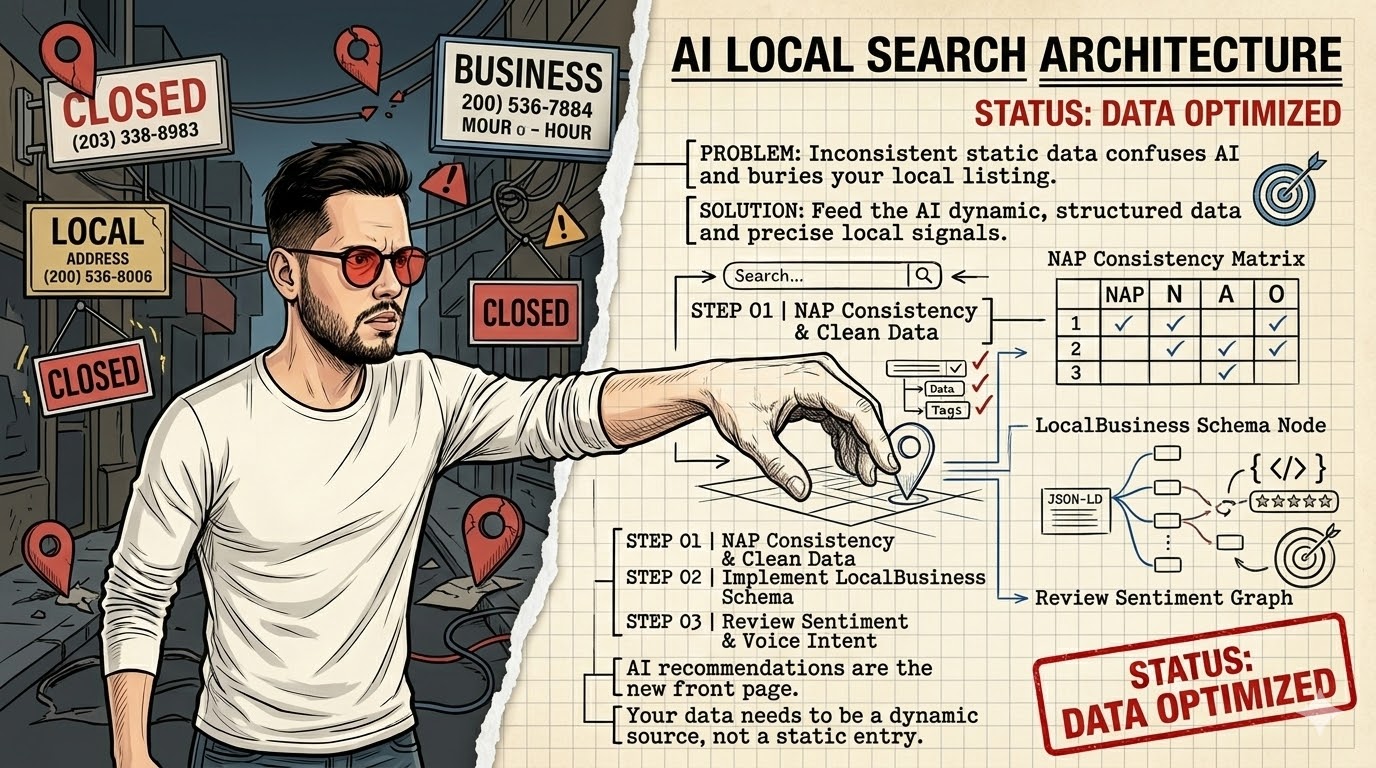
This means paying attention to things like schema markup. Use structured data to explicitly tell AI what your content is about. Think about FAQ schema for question-and-answer sections, or Product schema for specific items. Ensure your site speed is good. A slow site is a bad signal for everyone, including AI. Internal linking is also crucial. It helps AI understand the relationships between your content pieces and reinforces your site’s overall authority on a topic. It’s like building a clear roadmap for the AI. If you’re serious about AI SEO, tools like Postlabs can help automate some of these technical aspects.
AI Content Audit Checklist (2026)
| Item | Input | Result | Verdict |
|---|---|---|---|
| Schema Markup | JSON-LD | AI comprehension | High ROI |
| Content Structure | H2/Lists | Extractable facts | Essential |
| Niche Depth | Hyper-focus | Primary source | Game changer |
Monitoring and Adapting: Don’t Just Set It and Forget It
After all that work, you can’t just walk away. I’ve seen brands put in a ton of effort only to neglect tracking their results. You’ll never improve your strategy if you don’t actively monitor your Perplexity citations.
How do you do this? It’s not always straightforward, but you can set up alerts for your brand name. Use tools that monitor mentions across the web. Regularly search Perplexity for queries related to your niche. See which sources it cites. Is it you? Is it a competitor? If it’s a competitor, analyze their content. What are they doing differently? What specific data points are they providing that you aren’t? This feedback loop is crucial. It allows you to refine your content strategy, double down on what works, and fix what doesn’t. It’s an ongoing process, not a one-time fix. Adapt or be left behind.
What I would do in 7 days to get cited by Perplexity AI:
- Day 1-2: Niche Audit. Identify 3-5 hyper-specific, underserved questions in your niche where you can genuinely be the best source.
- Day 3-4: Content Outline. Create detailed outlines for 2-3 new articles, focusing on clear headings, bullet points, and specific data.
- Day 5-6: Draft & Structure. Write the first drafts, prioritizing factual accuracy and AI-friendly formatting. Add schema markup.
- Day 7: Internal Linking & Review. Link these new articles from relevant existing content. Review for clarity, conciseness, and factual density.
Your Perplexity Citation Checklist
- Focus on hyper-niche topics with deep expertise.
- Structure content with clear headings, lists, and short paragraphs.
- Prioritize factual accuracy and specific data points.
- Implement relevant schema markup (e.g., FAQ, HowTo).
- Build overall brand authority beyond just Perplexity.
- Monitor Perplexity for your niche and competitor citations.
Frequently Asked Questions About Perplexity AI Citations
How long does it take to get cited by Perplexity AI?
It varies widely. I’ve seen it happen in weeks for highly specific, unique content. For broader topics, it can take months of consistent effort. There’s no fixed timeline.
Can I pay Perplexity AI to cite my brand?
No, Perplexity AI does not offer paid placements for citations. Citations are earned based on the quality, authority, and relevance of your content, as determined by their AI models.
Does Perplexity AI use Google’s ranking factors?
While there’s overlap in what constitutes a high-quality website, Perplexity AI has its own unique algorithms for source selection. It prioritizes factual extraction and synthesis, which differs from Google’s traditional ranking for organic search results.