

Embrace Semantic Density for Local SEO Wins
Do it. Don’t chase keyword density. Semantic density directly aligns with how modern search engines understand local intent, leading to better visibility and more relevant traffic.
- Achieve higher local rankings by matching user intent, not just keywords.
- Avoid Google penalties and build genuine authority in your niche.
- Attract more qualified local leads who are ready to convert.
If you’re still stuffing keywords into your content, stop reading and fix that first. Seriously, it’s 2026.
Semantic Density vs. Keyword Density for Local SEO
| Criterion | Semantic Density | Keyword Density |
|---|---|---|
| Use Case | Modern, intent-based search optimization. | Outdated, keyword-focused tactics. |
| Strengths | Builds topical authority, improves user experience, future-proof. | Easy to measure (but often ineffective). |
| Limitations | Requires deeper content strategy, more complex to implement. | Risks penalties, poor user experience, limited ranking potential. |
The Old Way: Keyword Stuffing and Why It Broke My Sites
I remember the early 2010s. We all chased keyword density like it was the holy grail. The goal was simple: repeat your target keyword as many times as possible. If you wanted to rank for ‘plumber near me,’ you’d jam that phrase into every paragraph. It felt like a cheat code back then.
My biggest mistake was doing this for a client’s small plumbing business in 2014. I pushed ’emergency plumber London’ into the page title, headings, and body text, aiming for a 3% density. The site actually ranked for a few weeks. Then, boom. It disappeared from local packs and organic results. Your site will get ignored if you just repeat keywords without real value. That was a tough lesson to learn, honestly. It took months to recover that domain’s trust.
This approach created terrible content. It wasn’t readable. Users hated it. Search engines eventually hated it too. The trap is thinking more keywords equals more visibility. It doesn’t. Not anymore. That strategy is dead.
Warning: Keyword Stuffing Kills Local SEO
Repeating your target keyword excessively will trigger spam filters. This leads to lower rankings, reduced visibility in local search results, and can even result in manual penalties from Google.
What Even Is Semantic Density? And Why It Matters for Local
Okay, quick detour. Let’s define what we’re actually talking about. Semantic density isn’t just about synonyms. People often confuse it with LSI keywords from 2010. It’s much deeper than that. It’s about how thoroughly your content covers a topic. This includes related concepts, entities, and user intent. Think of it as painting a complete picture around your core subject.
For local SEO, this means covering everything a local customer might search for. If you’re a local bakery, it’s not just ‘bakery near me.’ It’s also ‘fresh sourdough bread,’ ‘wedding cakes custom,’ ‘gluten-free pastries,’ and ‘coffee shop with wifi.’ It’s about the entire ecosystem of related terms and ideas. Your content will miss the mark if you think it’s just about swapping out a few words. Google’s algorithms are smart enough to understand context. They know what a comprehensive page looks like. They reward that depth.
This is where AI SEO automation tools like Postlabs really shine. They help you identify these related concepts. They map out the semantic landscape for you. It saves a ton of manual research time. For a complete AI guide to this, check out this resource.
Semantic Density: The measure of how comprehensively a piece of content covers a topic, including its related concepts, entities, and the underlying user intent, rather than just repeating specific keywords.
Pros of Semantic Density
- Attracts diverse search queries, capturing more relevant traffic.
- Builds genuine authority and trust with both users and search engines.
- Future-proofs your content against algorithm updates focused on understanding.
Cons of Semantic Density
- Requires more in-depth content planning and research upfront.
- Can be harder to implement without specialized tools or expertise.
- Takes longer to see results compared to short-term, risky tactics.
Google’s Brain: How AI Understands Local Intent, Not Just Keywords
Google’s search engine isn’t a simple keyword matcher anymore. It’s powered by advanced AI like BERT and MUM. These models understand language context. They grasp the nuances of user queries. This means they don’t just look for exact keywords. They try to figure out what a user *really* wants. This changed everything for local SEO around 2021. Relying on old keyword tools will lead you astray.
For local searches, intent is paramount. Someone searching ‘best pizza’ isn’t just looking for the word ‘pizza.’ They want local pizza places. They might want reviews, opening hours, or delivery options. Google connects these dots. It understands the implied local need. Your content needs to reflect this deeper understanding. Don’t just target keywords; target the *questions* and *needs* behind them. This is a crucial shift in mindset.
I’ve seen many businesses miss this. They optimize for phrases like ‘dentist city name’ repeatedly. But Google is looking for pages that answer questions like ‘how to fix a chipped tooth’ or ’emergency dental care near me.’ These pages, rich with semantic connections, perform better. They serve the user’s true intent. This is why semantic density is so powerful. It aligns with how Google actually works today.
“The future of search is about understanding intent and context, not just keywords. Local businesses must adapt to this deeper semantic understanding.”
— General Consensus, SEO Industry Experts 2026
Mapping Your Content to Local Topics, Not Just Keywords
This is where the rubber meets the road. You need to map your content to entire local topics. Not just a list of keywords. I once spent hours manually mapping out topics for a small bakery client. We brainstormed every possible related concept. Think about the services you offer. Then think about all the problems those services solve. Also, consider all the questions local customers might have.
For a local real estate agent, it’s not just ‘houses for sale city name.’ It’s also ‘first-time home buyer guide city name,’ ‘best neighborhoods for families in city name,’ ‘property taxes explained city name,’ or ‘selling a home fast city name.’ Each of these is a topic cluster. Your content will feel thin if it only hits one keyword. It won’t build authority. It won’t answer enough questions.
Start with your core offering. Then branch out. Create supporting content that covers every angle. This builds a robust semantic network. Google sees your site as an authority on that local subject. This trust translates into higher rankings. It also means more organic traffic. People start seeing you as the expert. This builds brand recognition. It drives leads. It’s a long-term play, but it’s incredibly effective. That’s real, qualified traffic.
The Trap of "Exact Match" for Local SEO
Many local business owners still believe in the magic of exact match domains (EMDs) or exact match keywords. They think if their business name is ‘London Plumbers’ and their website is ‘londonplumbers.com,’ they’re set. Or that repeating ‘best coffee shop London’ is the only way to rank. This is a huge trap. It’s a myth that needs busting. You’ll limit your reach if you obsess over exact phrases.
Google has moved past this. An exact match domain might have given a tiny boost years ago. Today, it offers almost no advantage. In fact, it can look spammy. Google prioritizes relevance and authority. A brand name like ‘The Daily Grind Coffee’ with rich, semantically dense content about coffee, pastries, and local events will outperform ‘bestcoffeeshoplondon.com’ every single time. This is a hard truth for some to swallow.
Focusing too much on exact match phrases also makes your content unnatural. It sounds robotic. Users bounce. Google notices. The goal is to create content that naturally answers questions. It should use a variety of related terms. This signals to Google that you understand the topic deeply. It’s not about one magic keyword. It’s about comprehensive coverage. That’s the real secret sauce.
Myth
Exact match keywords and domains are essential for ranking high in local search.
Reality
Google prioritizes topical relevance and user intent over exact keyword matches. Over-optimizing for exact matches can harm your rankings and user experience.
Building Topical Authority for Your Service Area
Think of your website as a library for your local niche. You want to be the go-to resource. This is how you build topical authority. A small local electrician client of mine gained huge traction. They started by covering ‘smart home wiring’ and ‘EV charger installation’ in immense detail. They didn’t just list services. They wrote guides, FAQs, and comparison articles. They became the local expert.
This means going beyond your basic service pages. Create blog posts, guides, and resource hubs. Cover every facet of your industry relevant to your local area. If you’re a landscaper, write about ‘drought-resistant plants for [City Name]’ or ‘best lawn care schedule in [Neighborhood].’ Your site won’t rank for broad local terms if it lacks this kind of depth. It will just be another generic business listing.
Topical authority tells Google you are a reliable source. It signals that your business knows its stuff. This trust translates into higher rankings. It also means more organic traffic. People start seeing you as the expert. This builds brand recognition. It drives leads. It’s a long-term play, but it’s incredibly effective. Tools like Postlabs can help you map out these content opportunities.
Leveraging AI Tools for Semantic Analysis
Honestly, doing all this semantic analysis manually used to be a nightmare. I’d spend hours with spreadsheets and keyword tools. Now, AI has changed the game. Tools can analyze competitor content. They identify missing semantic entities. They suggest related topics you might have overlooked. They save 80% of that manual research time. Weirdly enough, many still don’t use them.
These tools help you understand the ‘topic gap.’ They show you what your competitors are covering semantically that you aren’t. This is gold. It gives you a roadmap for content creation. You can quickly identify areas where your content is thin. Then you can enrich it. This ensures your pages are truly comprehensive. Your content will be less effective if you don’t use the right tools. You’ll miss key opportunities.
For example, if you’re writing about ‘local car repair,’ an AI tool might suggest including terms like ‘engine diagnostics,’ ‘brake service cost,’ ‘tire rotation benefits,’ and ‘ASE certified mechanics.’ These aren’t just keywords. They are semantic entities. They signal a deeper understanding of the topic. This is where AI SEO automation truly shines. It helps you build that semantic depth efficiently. It’s a game-changer for local businesses.
Measuring Semantic Performance: Beyond Rank Tracking
Okay, so you’ve implemented semantic density. How do you know it’s working? Many clients only looked at keyword rankings. They missed the bigger picture. If your single target keyword moved from #5 to #3, great. But what about the hundreds of other related queries? You won’t see true progress if you only check direct keyword positions. That’s a narrow view.
You need to look at broader metrics. Track organic traffic to your semantically optimized pages. Are you seeing an increase in long-tail keyword rankings? Check your Google Search Console. Look for impressions and clicks for queries you didn’t explicitly target. Are users spending more time on your pages? This indicates relevance. Are conversion rates improving for local searches? That’s the ultimate goal.
Tools that analyze topical coverage can also help. They show you how much of a topic you’ve covered. They compare it to top-ranking pages. This gives you a score for semantic completeness. It’s a more holistic view than just keyword density. It tells you if your content is truly authoritative. This is how you measure real, sustainable growth in local SEO.
Why Local Businesses Must Adapt to Semantic SEO Now
The writing is on the wall. The SEO landscape has shifted. Competitors are already doing this. They are building semantically rich content. They are winning local search visibility. If you stick to outdated methods, you’ll fall behind. It’s not a matter of ‘if’ but ‘when’ your old tactics stop working entirely. This is a critical moment for local businesses to adapt.
Semantic SEO isn’t just an advantage anymore. It’s becoming a requirement. Google wants to provide the best answers. It wants to connect users with the most relevant local businesses. That means businesses that demonstrate deep expertise. It means businesses that cover topics comprehensively. It means businesses that understand their customers’ full range of needs.
Ignoring semantic density is like trying to drive a car with a map from 2005. The roads have changed. The navigation system is smarter. You need to update your approach. This isn’t just about rankings. It’s about survival and growth in a competitive digital world. Embrace it now. Your local business will thank you later.
Local SEO Content Audit (2026)
| Project/Item | Cost/Input | Result/Time | ROI/Verdict |
|---|---|---|---|
| Keyword Stuffing | Low effort, high risk | Short-term spike, then penalty | Negative |
| Semantic Content | High effort, low risk | Long-term growth, authority | High |
| AI-Assisted Semantic | Medium effort, low risk | Faster growth, efficiency | Very High |
What I Would Do in 7 Days for Local Semantic SEO
- Day 1-2: Audit Your Current Content. Look for pages that are thin. Identify those that just repeat keywords. Pinpoint opportunities for deeper topic coverage.
- Day 3: Map Core Local Topics. Brainstorm 3-5 main topics related to your business and service area. Use a tool to find related entities and questions.
- Day 4-5: Outline New Content. Create detailed outlines for 2-3 new blog posts or service pages. Focus on answering every possible user question for those topics.
- Day 6: Start Writing or Rewriting. Begin crafting content that is rich in semantic connections. Avoid keyword repetition. Focus on natural language.
- Day 7: Internal Linking Strategy. Link your new, semantically rich content to relevant older pages. This strengthens your site’s overall topical authority.
Local Semantic SEO Action Checklist
- Review your Google My Business (GMB) profile for comprehensive service descriptions.
- Analyze top-ranking local competitors for their content depth and related topics.
- Identify 5-10 long-tail local keywords your current content doesn’t cover.
- Update at least one existing service page to include more semantic entities.
- Create a content calendar for new, semantically focused local blog posts.
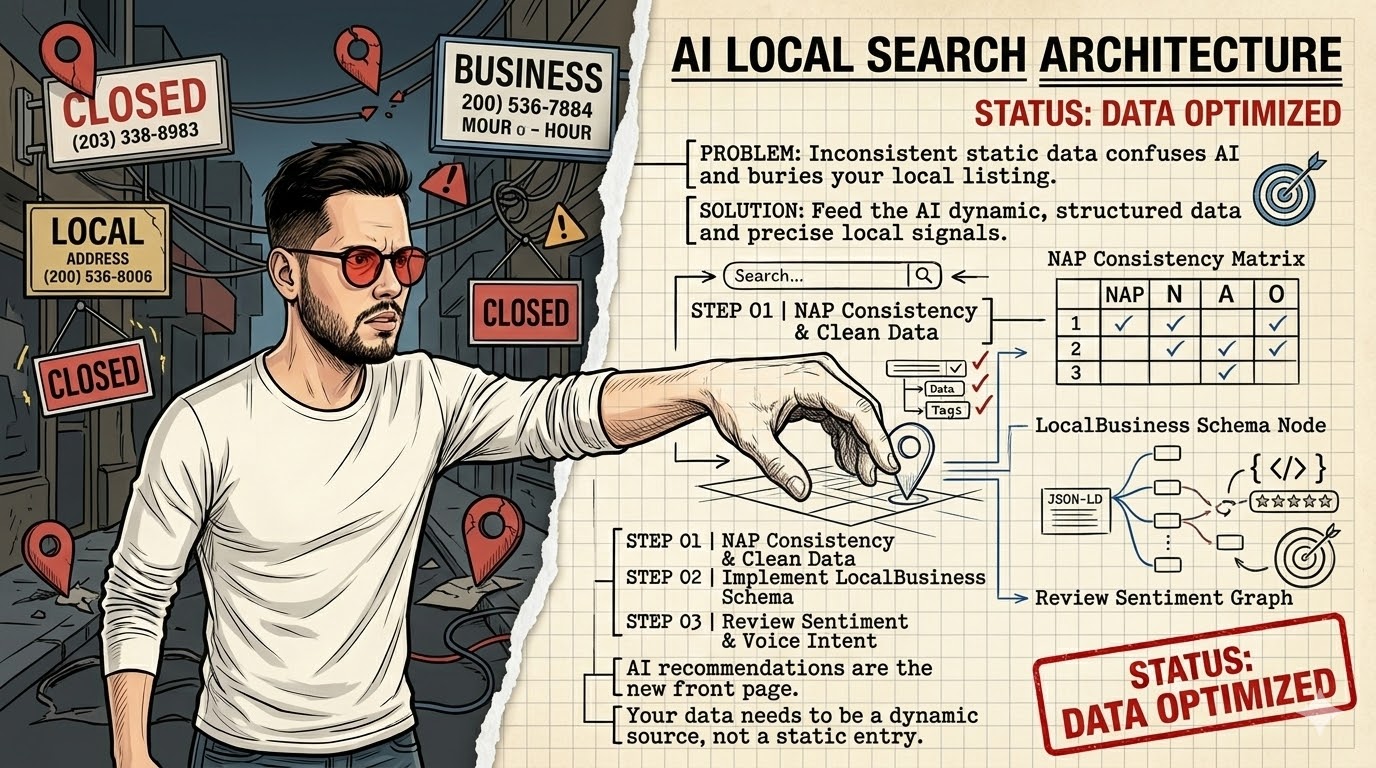
- Ensure all local citations (directories) use consistent business information.
- Monitor Google Search Console for new query impressions and clicks.
Frequently Asked Questions About Local Semantic SEO
What’s the biggest mistake in local semantic SEO?
The biggest mistake is treating it like old-school keyword density. Semantic SEO requires understanding user intent and covering topics comprehensively, not just repeating phrases. It’s about context.
How do I find semantic keywords for my local business?
Focus on related entities, questions, and sub-topics. Use tools that analyze competitor content. Think about all the problems your local customers might have. Then create content that answers those questions.
Can AI tools really help with semantic density for local SEO?
Yes, absolutely. AI SEO automation platforms can identify semantic gaps. They suggest related terms and entities. They help you create comprehensive content briefs much faster. This makes the process more efficient.