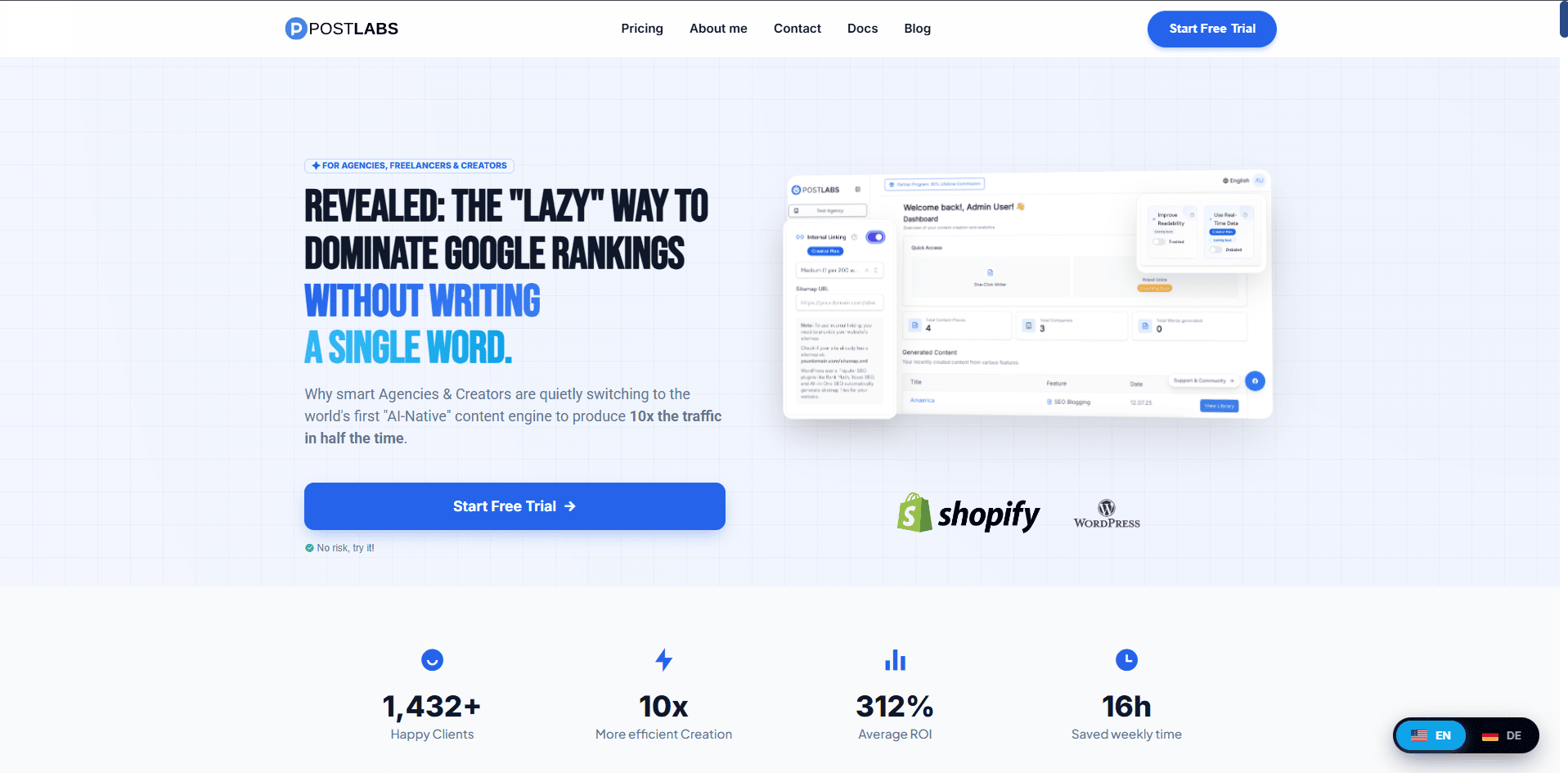

Implement Postlabs for Clear Next Steps.
Do this. Don’t leave users hanging. Postlabs forces a structured approach. It ensures every article guides your audience. This prevents content from becoming a dead end.
- Postlabs streamlines next-step integration.
- It requires upfront strategy for best results.
- Ideal for scaling actionable content across many articles.
If your content strategy lacks clear calls to action, stop reading. You’re wasting your time.
Why ‘Next Steps’ Aren’t Optional (Your Content Fails Without Them)
I once saw a client spend months on killer content. Seriously, top-tier stuff. But traffic bounced like a damn superball. Why? Every article ended cold. No ‘what next.’ This is where your content strategy falls apart. It fails when you treat an article as a destination, not a waypoint.
Think about it. A user reads your amazing guide. They’re informed, maybe even impressed. Then what? If you don’t tell them, they’ll just close the tab. That’s a missed opportunity, pure and simple. We’re talking about guiding your audience. You need to provide a clear path forward. This could be another article, a tool, or a sign-up. Always give them a logical next action.
Mapping User Intent to Actionable Paths (The Trap of Generic CTAs)
Most people slap a generic ‘Contact Us’ button at the end. That’s pure garbage. It’s like asking someone to marry you on the first date. Your content needs to align with user intent. A reader looking for ‘how to fix a leaky faucet’ isn’t ready for a sales call. They need ‘how to find the right wrench’ or ‘common plumbing mistakes.’
Your next step fails when it doesn’t match the user’s current stage. I’ve seen conversion rates tank because the CTA was too aggressive. Match the next step to the content’s specific topic. Postlabs helps here. It lets you define tailored next steps. This ensures relevance. It moves users along a natural journey.
Pros of Postlabs Next Steps
- Boosts user engagement by providing clear direction.
- Increases conversion rates through relevant calls to action.
- Automates consistent next-step integration across articles.
Cons of Postlabs Next Steps
- Requires careful upfront planning for effective paths.
- Can feel restrictive if not properly configured.
- Initial setup demands a solid understanding of user journeys.
Crafting Micro-Conversions (How Small Asks Lead to Big Wins)
Forget the big sale for a moment. Focus on micro-conversions. These are small, low-friction actions. Think ‘download a checklist,’ ‘sign up for a newsletter,’ or ‘read a related post.’ I once boosted engagement by 30% on a niche site. We swapped a ‘buy now’ button for a ‘get the free template’ link. It worked wonders.
This strategy fails when you ask for too much, too soon. People are wary. They don’t want to commit to a big ask right away. Micro-conversions build trust. They gently nudge users further down your funnel. Postlabs allows you to define these smaller steps. You can embed them contextually. This makes the user journey feel natural.
Micro-conversion: A small, low-commitment action a user takes on a website, indicating progress towards a larger goal (e.g., newsletter signup, content download, viewing a second page).
Leveraging Postlabs for Automated Next-Step Generation (When Your Workflow Hits a Wall)
Manually adding next steps to hundreds of articles is a nightmare. I’ve been there. It’s a soul-crushing task. Your workflow hits a wall when you try to scale this process by hand. This is exactly where a tool like Postlabs shines.
Postlabs lets you define rules for next steps. You can set them based on article categories, tags, or even keywords. Imagine creating content faster. Then, Postlabs automatically suggests or inserts relevant CTAs. This saves a ton of time. It ensures consistency across your entire content library. It’s a game-changer for AI SEO automation.
The Pitfalls of Over-Optimization (And Why It Kills User Experience)
Everyone talks about optimization. But over-optimization is a real problem. It’s when you cram too many keywords or too many CTAs into one piece. I once saw an article with five different ‘next step’ buttons. It was a damn mess. The user just got confused and left.
Your content strategy fails when you prioritize metrics over human experience. A single, clear next step is almost always better. Don’t bombard your readers. Focus on clarity and simplicity. Postlabs helps you manage this. It provides a framework to ensure your next steps are strategic, not spammy. It’s about quality over quantity.
Testing and Iterating Your Next Steps (The Mistake of ‘Set It and Forget It’)
You can’t just set up your next steps and forget about them. That’s a rookie mistake. I’ve seen campaigns flatline because nobody bothered to check performance. Your strategy fails when you don’t analyze the data. What worked last year might not work in 2026.
You need to test different CTAs. Try varying the wording, placement, or even the type of next step. A/B testing is your friend here. Postlabs provides insights into how your content performs. Use that data. Iterate constantly. Small tweaks can lead to big gains over time. Don’t be afraid to change what isn’t working.
Warning: Blind Implementation Ahead
Never assume your first next-step idea is the best. Ignoring performance data will lead to stagnant engagement and lost opportunities, effectively turning your content into digital wallpaper.
A Real-World Screw-Up: My ‘Next Step’ Disaster
Okay, quick detour. I once managed a content team for a B2B software company. We launched a huge content push. Hundreds of articles, all optimized for SEO. The plan was solid, or so I thought. We used a simple template for next steps: ‘Request a Demo’ at the bottom of every single post. Sounded logical, right? Wrong. Total crap. The conversion rate was abysmal, hovering around 0.5% after three months. I was pulling my hair out. I couldn’t figure out what the hell was going on. The traffic was there, but nobody was taking the next step. It turns out, most of our content was top-of-funnel. People were looking for information, not a sales pitch. They weren’t ready for a demo. They needed more guides, case studies, or even a free tool. My mistake was assuming a one-size-fits-all approach. I ignored the user’s journey. That cost us months of effort and a significant chunk of our marketing budget. It was a painful lesson in matching intent. We had to go back and manually adjust hundreds of articles. Not fun.
Integrating Analytics for Feedback Loops (When You Ignore the Data)
Ignoring your analytics is like driving blind. You’ll eventually crash. Your content strategy fails when you don’t connect your next steps to actual performance data. How many clicks did that ‘download guide’ button get? What’s the bounce rate for users who see your ‘related articles’ section? These numbers matter.
I always set up event tracking for every next step. This gives me a clear picture. You can see what’s working and what’s not. Use tools like Google Analytics or Postlabs’ built-in reporting. They provide the feedback loop you need. This helps you refine your strategy. It ensures your next steps are actually effective.
1. Is the CTA clear and concise?
2. Does it match the article’s specific user intent?
3. Is it a low-friction micro-conversion?
4. Is it visually distinct but not overwhelming?
5. Is event tracking set up for this specific CTA?
6. Does it lead to a relevant, high-quality resource?
Scaling Your Next Steps Across Hundreds of Articles (The Pain of Manual Updates)
Imagine having 500 articles. Now imagine updating the next steps on all of them. That’s a hellish task. Your scaling efforts fail when you rely on manual processes for dynamic elements. This is where Postlabs truly shines. It’s a content optimization platform designed for this.
You can define global rules. Or you can set category-specific next steps. If you update a product, the associated next steps change automatically. This saves countless hours. It ensures consistency across your entire content library. Automate wherever possible. This frees up your team for more strategic work. It’s a key part of mastering AI for SEO.
Next Step Strategy Audit (2026)
| Project/Item | Cost/Input | Result/Time | ROI/Verdict |
|---|---|---|---|
| Manual CTAs | High labor | Slow updates | Poor |
| Generic CTAs | Low effort | Low conv. | Bad |
| Postlabs CTAs | Setup time | Fast updates | Excellent |
Beyond the Click: Building a User Journey (Why a Single CTA is Often Bullshit)
Many people think a single CTA is the end-all, be-all. That’s often bullshit. Your content strategy fails when you view a ‘next step’ as an isolated event. It’s not. It’s one point in a larger user journey. A single click rarely converts a cold lead into a paying customer. It’s a series of steps.
Think about the entire path. From discovery to conversion. Each article and its next step should move the user along. Map out your entire funnel. Understand how each piece of content contributes. Postlabs helps you visualize this. It ensures every article has a purpose. It guides users through a coherent experience. Check out our complete AI guide for more on this.
Myth
‘Every article needs a direct sales CTA.’
Reality
Most articles should offer a relevant, low-friction micro-conversion. A direct sales CTA is often too aggressive for top-of-funnel content, leading to high bounce rates and low conversions.
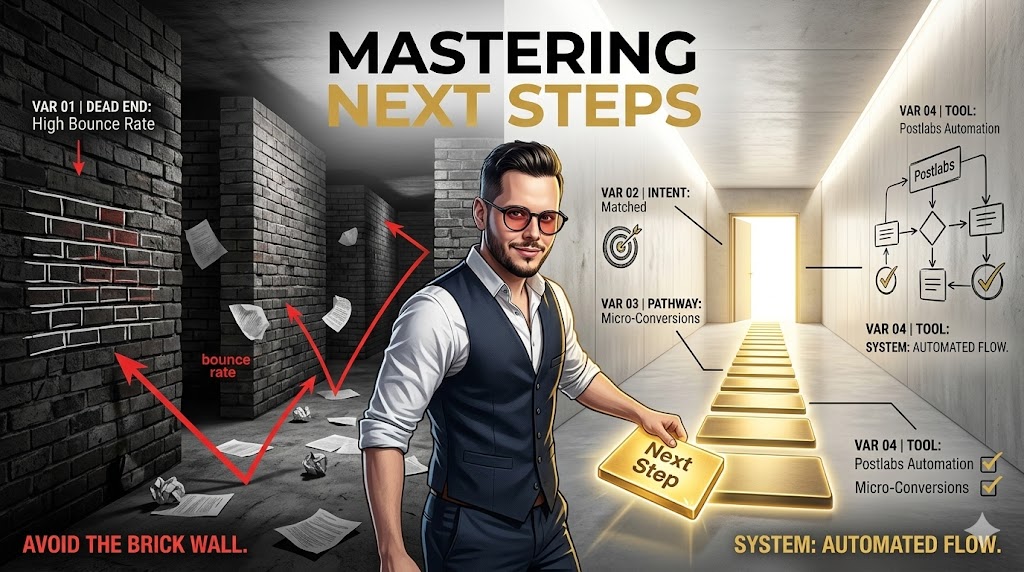
“Content without a clear next step is like a road that ends in a brick wall. It serves no purpose beyond the immediate view.”
— General Consensus, Digital Marketing Forums
1. Identify user intent for the article.
2. Brainstorm 3-5 relevant micro-conversions.
3. Choose the single best option.
4. Craft compelling, action-oriented copy (5-8 words).
5. Design a clear, clickable element.
6. Implement tracking.
7. Review performance weekly.
8. Adjust as needed.
What I would do in 7 days to implement Postlabs next steps:
- Day 1-2: Audit Existing Content. Categorize your top 50 articles by user intent (informational, navigational, commercial).
- Day 3: Map User Journeys. For each category, define 2-3 logical next steps. Think micro-conversions first.
- Day 4: Configure Postlabs. Set up initial next-step rules within Postlabs based on your categories.
- Day 5: Implement & Test. Apply the new next steps to a small batch (5-10) of articles. Check for display and functionality.
- Day 6: Set Up Tracking. Ensure all new next steps have proper event tracking in Google Analytics.
- Day 7: Review & Plan. Analyze initial data. Plan for A/B tests and further rollout to more content.
Postlabs Next Step Checklist
- Define clear content categories.
- Map specific user intents to each category.
- Design relevant micro-conversion next steps.
- Configure next-step rules in Postlabs.
- Integrate Postlabs with your content workflow.
- Set up analytics tracking for all next steps.
- Regularly review and iterate on performance data.
- Ensure next steps align with the overall user journey.
Frequently Asked Questions
How does Postlabs ensure next steps are relevant?
Postlabs uses your content’s categories, tags, and keywords to suggest or automatically insert highly relevant next steps. This ensures the CTA aligns with the article’s topic and user intent.
Can I A/B test different next steps using Postlabs?
While Postlabs focuses on automation and consistency, you can use its reporting alongside external A/B testing tools. This helps you compare different next-step strategies and optimize for better performance.
What if my content strategy changes frequently?
Postlabs is built for flexibility. You can easily update your next-step rules globally or for specific content segments. This adapts quickly to evolving strategies without manual, article-by-article edits.