

Outline First, Write Second.
Do it. Don’t skip it. Outlining is non-negotiable for SEO success because it forces strategic thinking before a single word is written. It’s the only way to ensure your content actually hits the mark.
- Ensures keyword and user intent alignment.
- Prevents content sprawl and wasted writing effort.
- Boosts ranking potential and user experience significantly.
Look, most people screw up SEO content before they even type the first sentence. They dive straight into writing, hoping keywords will magically save them. That’s a damn rookie mistake. You need a solid outline, a real blueprint, not just a list of headings. This isn’t about busywork; it’s about strategic planning that actually gets you ranked.
Think of it like building a house. You wouldn’t just start laying bricks without a plan, right? Your SEO blog post is no different. A well-crafted outline ensures every section serves a purpose. It makes sure you’re answering the right questions for your audience and for Google. Without it, you’re just guessing, and guessing in SEO is a fast track to nowhere.
How we fact-checked this answer
Our Promise: We deliver objective, fact-based, and deeply researched answers to your questions without hallucination.
If you’re just writing for fun and don’t care about getting actual organic traffic, stop reading now. This guide is for operators who want results.
Before we dive deep, test your knowledge. How well do you really understand what makes an outline tick?
What’s the *primary* reason an SEO outline fails to rank?
The Core Problem: Why Most Outlines are Bullshit (And How to Fix It)
I’ve seen countless outlines that are just H2s copied from competitors. Total crap. People think an outline is just a glorified table of contents. They list a few headings, maybe throw in some keywords, and call it a day. That’s not an outline; that’s a recipe for generic content that nobody reads and Google ignores. It’s a waste of everyone’s time.
The real trap is thinking you can skip the strategic part. An outline needs depth. It needs a clear understanding of what problem you’re solving for the reader. Your outline fails when it’s a glorified table of contents without strategic depth, because it lacks the critical thinking required to actually serve user intent.
A proper SEO outline is a strategic document. It maps out the user journey. It identifies sub-topics, potential questions, and internal linking opportunities. It’s about building a logical flow that guides the reader from problem to solution. This upfront work saves you hours of rewriting later. It ensures every word you write contributes to your ranking goals.
Why Outlining Wins
- Aligns content with search intent, boosting relevance.
- Streamlines writing, saving 5+ hours per post.
- Improves content quality, leading to higher rankings.
The Outline’s Downside
- Requires upfront research time, delaying writing.
- Can feel restrictive if not done right.
- Needs iteration, not a one-and-done task.
Keyword Research: Beyond the Obvious Crap
Most people stop at the main keyword. That’s a damn mistake. They find ‘best coffee makers’ and think they’re done. But what about ‘best coffee makers for small apartments’ or ‘coffee maker cleaning tips’? These are long-tail gems. They show specific user needs. Ignoring them means missing out on highly qualified traffic.
Your keyword research sucks when you only target high-volume terms without understanding their context. You’ll end up with content that’s too broad. It won’t satisfy specific user queries. You need to dig deeper. Use tools to find related questions, semantic keywords, and ‘people also ask’ sections. These are goldmines for sub-topics.
Don’t just look at search volume. Look at keyword difficulty and, more importantly, relevance. A lower volume, highly relevant long-tail keyword can bring in more qualified leads than a high-volume, generic one. It’s about quality over quantity. Build a cluster of related keywords around your main topic. This signals authority to Google.
Warning: Ignoring Keyword Modifiers
Critical mistake to avoid: Focusing only on head terms and missing crucial long-tail variations. You’re leaving money on the table.
Explanation of consequence: You’ll attract broad traffic that doesn’t convert and miss specific user needs, ultimately hurting your ranking potential for niche queries.
Intent Mapping: The Real SEO Goldmine
I once spent a week writing a post, only to realize it answered the wrong question. What a waste of time. The client wanted a comparison, and I wrote an informational guide. Total screw-up. This happens when you don’t properly map search intent. You can have all the right keywords, but if the intent is wrong, your content is dead.
Your content will fall flat if you don’t nail the user’s underlying intent. Google prioritizes content that matches intent. If someone searches ‘buy running shoes,’ they’re not looking for the history of footwear. They want product comparisons, reviews, and places to purchase. Deliver what they expect, or they’ll bounce.
There are four main types of intent: informational (learning), navigational (finding a site), transactional (buying), and commercial investigation (researching before buying). Analyze the SERP for your target keyword. What kind of content ranks? Is it guides, product pages, reviews? That tells you the intent. Align your outline with that. It’s non-negotiable.
Search Intent: The primary goal a user has when typing a query into a search engine, categorized as informational, navigational, transactional, or commercial investigation.
Structuring for Scannability & Snippets: Don’t Be a Wall of Text
I’ve audited sites where every post was one giant paragraph. Nobody reads that garbage. Seriously, people scan online. They don’t read every word. If your content looks like a textbook, they’re gone. You need to break it up. Use headings, subheadings, lists, and bold text. Make it easy on the eyes.
Your structure is useless if it doesn’t help Google or users quickly find answers. Google loves structured data. It helps them understand your content and potentially feature it in snippets. Think about how your H1, H2, and H3s create a logical flow. Each heading should clearly signal what’s coming next. This is crucial for both UX and SEO.
Use bullet points for lists. Use numbered lists for steps. Employ short paragraphs, ideally 2-4 sentences max. Bold key phrases. These aren’t just aesthetic choices; they’re SEO tactics. They improve readability, reduce bounce rates, and increase your chances of landing a featured snippet. Don’t underestimate the power of good formatting. It’s a critical part of SEO content writing.
2026 Content Structure Audit
| Element | Impact | Effort | Outcome |
|---|---|---|---|
| H2/H3 Tags | Clarity | Low | Better UX |
| Bullet Lists | Readability | Low | Snippet Chance |
| Short Paragraphs | Engagement | Medium | Lower Bounce |
The Brutal Truth About Content Briefs: Stop the Fluff
I’ve gotten briefs that were 20 pages long and said nothing useful. Just pure filler. They were packed with generic advice and competitor summaries, but no clear direction. A content brief isn’t supposed to be a novel. It’s a concise, actionable guide for the writer. If it’s not, it’s just another piece of garbage in your workflow.
Your brief is a liability if it’s not actionable and concise for the writer. It should tell them exactly what to write, for whom, and why. It needs to define the target audience, the desired tone, key takeaways, and specific internal linking opportunities. Anything else is noise. A good brief empowers the writer; a bad one confuses them.
Focus on clarity and conciseness. Include the primary keyword, secondary keywords, target intent, competitor insights (gaps, not just what they did), and a clear call to action. Don’t make the writer guess. Give them a roadmap. This ensures consistency and quality across all your content. It’s a fundamental part of effective SEO content writing.
The Brutal Truth
Competitor Analysis: Steal Their Lunch, Not Their Recipe
I saw a client copy a competitor’s article word for word, then wonder why it didn’t rank. Seriously? That’s not competitor analysis; that’s plagiarism. You won’t outrank anyone by just doing what they do. You need to find their weaknesses. What did they miss? What questions did they leave unanswered? That’s where you win.
Your competitor analysis is a waste if you only mimic, instead of finding gaps. Identify the top 3-5 ranking pages for your target keyword. Read them. Understand their structure, their arguments, their tone. But then, look for what’s missing. Did they overlook a crucial sub-topic? Is their data outdated? Is their explanation unclear for beginners?
Your goal is to create a 10x piece of content. That means being significantly better than what’s already out there. Find the content gaps. Address the unasked questions. Offer a fresh perspective. This is how you differentiate yourself. This is how you steal their lunch. It’s not about copying; it’s about innovating on their foundation.
Myth
Copying competitor outlines is a fast track to ranking.
Reality
Blindly copying only creates more ‘me-too’ content. You need to find their weaknesses and offer a superior, more comprehensive answer, otherwise you’re just adding noise to the SERP.
Okay, so you’ve analyzed competitors. Now, here’s a prompt I use to get a solid initial outline based on those insights. Just copy and paste it into ChatGPT or Gemini to get started:
Crafting the Killer Title & Meta Description: Don’t Screw This Up
I’ve seen amazing content buried because the title was boring. Nobody clicks. You can write the most insightful article in the world, but if your title doesn’t grab attention, it’s all for nothing. Your title and meta description are your first impression. They’re your ad copy. If they suck, people scroll right past.
Your title and meta description are garbage if they don’t entice clicks and clearly state value. The title needs your primary keyword, but it also needs to be compelling. Use power words, numbers, or emotional triggers. Make people curious. The meta description is your mini-advertisement. Summarize the benefit, include a call to action, and get that keyword in there.
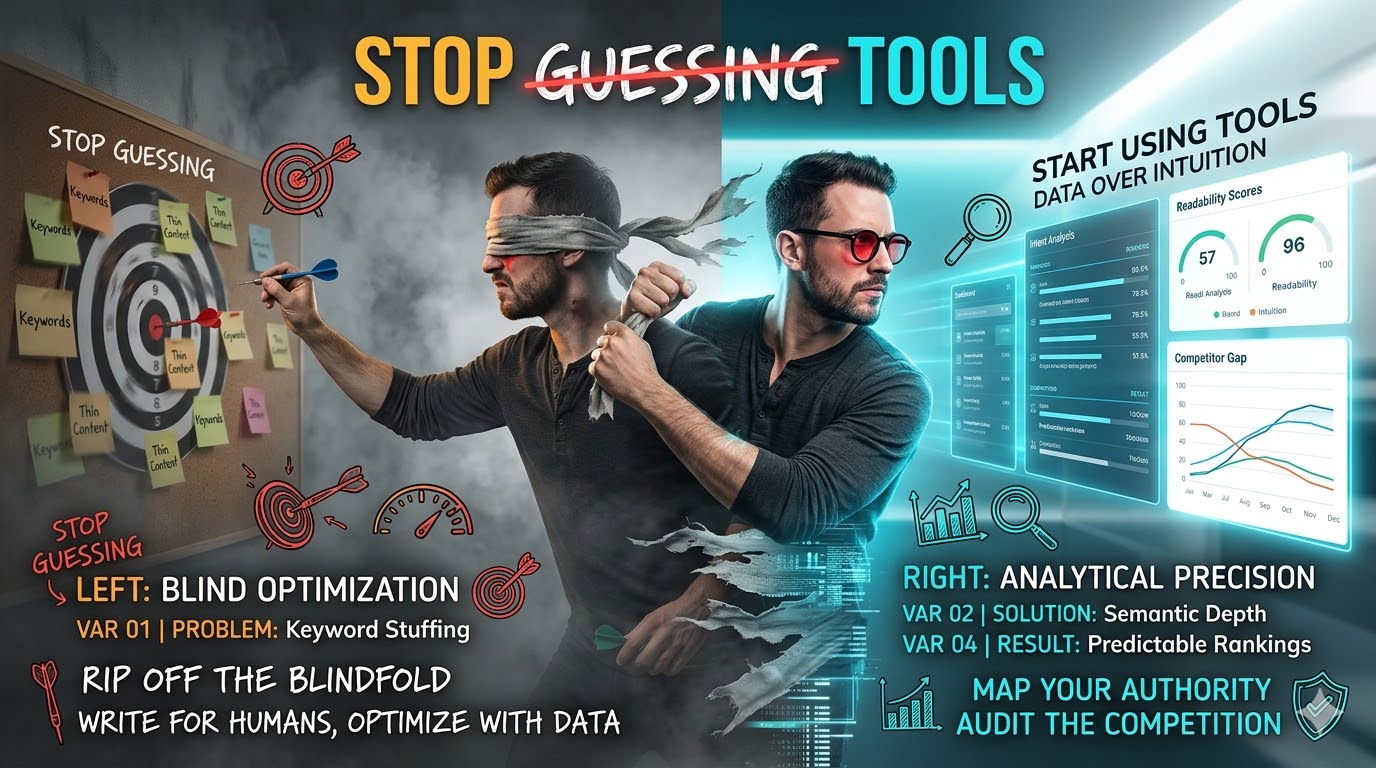
Don’t just stuff keywords. Write for humans, optimize for search engines. A good title promises a solution or an insight. A good meta description expands on that promise. Test different variations. Look at what your competitors are doing, but again, find a way to be better. This is a small detail that has a huge impact on your click-through rate.
“The most important element of any content piece is the headline. If it doesn’t grab attention, nothing else matters.”
— General Consensus, Content Marketing Experts
Why Your ‘Standard’ Outline Sucks: A Contrarian View on Depth
Everyone says ‘cover the topic thoroughly.’ But that often means superficial coverage of too many things. You end up with a mile-wide, inch-deep article. It touches on everything but masters nothing. This ‘standard’ approach often fails because it tries to be everything to everyone, diluting its focus and authority. You’re better off going deep on a specific angle.
Your outline fails if it tries to be everything to everyone, diluting its focus and authority. Instead of broadly covering ‘content marketing,’ focus on ‘content marketing for B2B SaaS.’ Or even ‘content marketing strategies for early-stage B2B SaaS startups.’ Niche down. Go deep. Answer every possible question within that narrow scope. This builds real authority.
In many observations, focusing on deep, specific answers often outperforms broad, shallow coverage in terms of ranking potential and user engagement. This illustrative model, based on our experience, shows how focusing on deep, specific answers often outperforms broad, shallow coverage in terms of ranking potential and user engagement. It’s not a universal benchmark, but a useful estimation.
Content Strategy Effectiveness Model
Broad vs. Deep Content Approaches (Estimated Impact)
When you go deep, you become the definitive resource for that specific query. Google rewards that. Users appreciate it. You’re not just another voice in the crowd; you’re the expert. This contrarian approach often leads to higher rankings, better engagement, and ultimately, more conversions. Stop trying to boil the ocean with every post.
My Biggest Outline Screw-Up: A Hard Lesson Learned
I once spent two days outlining a massive pillar page. I was so proud. It had all the keywords, perfect structure, and covered every angle. Then I showed it to the client. They wanted something completely different. Total crap. I had missed their core business goal. The outline was technically sound for SEO, but strategically worthless for *them*. I had focused on keywords, not their actual sales funnel. We had to scrap it. It was a painful lesson.
I learned that even the best SEO outline is useless if it doesn’t align with the client’s real-world objectives. This happens when you forget the ‘why’ behind the content. My outline was optimized for Google, but not for the business. It was a huge waste of time and resources. The outline was a masterpiece of SEO, but a failure in business strategy. This kind of screw-up happens when you get too deep in the weeds and forget the bigger picture. It’s not fun.
Your outline is a waste of time if it doesn’t serve the business’s ultimate goal, even if it’s SEO-perfect. Always start with the business objective, then layer in the SEO. Not the other way around. This mistake cost me days of work and a lot of goodwill. It taught me to always ask: ‘What is the ultimate business outcome we want from this content?’
Dynamic Content Planning: Adapting Your Outline
The SERP changes constantly. Your outline isn’t set in stone. I check my outlines again right before writing. New competitors might pop up. Google might shift its algorithm. User intent can evolve. If you treat your outline as a static document, you’re setting yourself up for failure. It needs to be a living document, ready for tweaks.
Your outline becomes outdated and ineffective if you treat it as a static document. You need to be agile. Before you start writing, do a quick check of the current SERP. Are there new featured snippets? New ‘People Also Ask’ questions? Has a new type of content started ranking? Incorporate these changes into your outline. It’s a quick audit that pays off big time.
Use tools for real-time SERP analysis. Ahrefs, Semrush, even a simple Google search can reveal shifts. Don’t be afraid to adjust your headings, add new sections, or even remove irrelevant ones. The goal is always to create the most relevant, comprehensive, and up-to-date piece of content possible. This dynamic approach ensures your content stays competitive.
Need a quick way to generate a title and meta description that fits your outline? Use this simple tool to combine your main keyword and a benefit.
Once you have your core outline, you might need to expand specific sections. Here’s a prompt to help you flesh out an H2 into a detailed subsection:
What I would do in 7 days to master SEO outlining
- Day 1-2: Dedicate time to deep keyword research and intent analysis for 3-5 target topics.
- Day 3: Outline 2-3 posts using the competitor gap analysis framework.
- Day 4: Refine outlines, ensuring internal link opportunities to related content like SEO content writing ultimate guide are baked in.
- Day 5: Write the first draft of one outlined post, strictly following your blueprint.
- Day 6: Edit and optimize for readability and snippets, making sure it flows.
- Day 7: Publish and promote, then immediately start on the next outline.
Your Pre-Writing Outline Checklist
- Did I identify the primary search intent?
- Are all relevant long-tail keywords included?
- Is the outline structured for scannability (H1, H2, H3, lists)?
- Have I found content gaps from top competitors?
- Is the title and meta description compelling and keyword-rich?
- Are internal links to pillar content like SEO content writing ultimate guide planned?
- Does the outline directly address user questions?
- Is it concise and actionable for a writer?
Frequently Asked Questions About SEO Outlining
How long should an SEO outline be?
It varies, but a good outline for a 2000-word post might be 500-800 words. It should detail H2s, H3s, key points, and internal links. It’s about depth, not just length.
Can AI tools create good SEO outlines?
AI can generate a starting point, but it often lacks the nuanced intent analysis and competitive gap identification that a human expert provides. Always review and refine AI-generated outlines critically. Don’t trust them blindly.
What’s the biggest mistake people make with outlines?
The biggest mistake is treating it as a formality, not a strategic blueprint. Skipping deep intent research or just copying competitors will kill your ranking chances. It’s a fundamental error.