
Leverage AI for Descriptions, But Never Alone
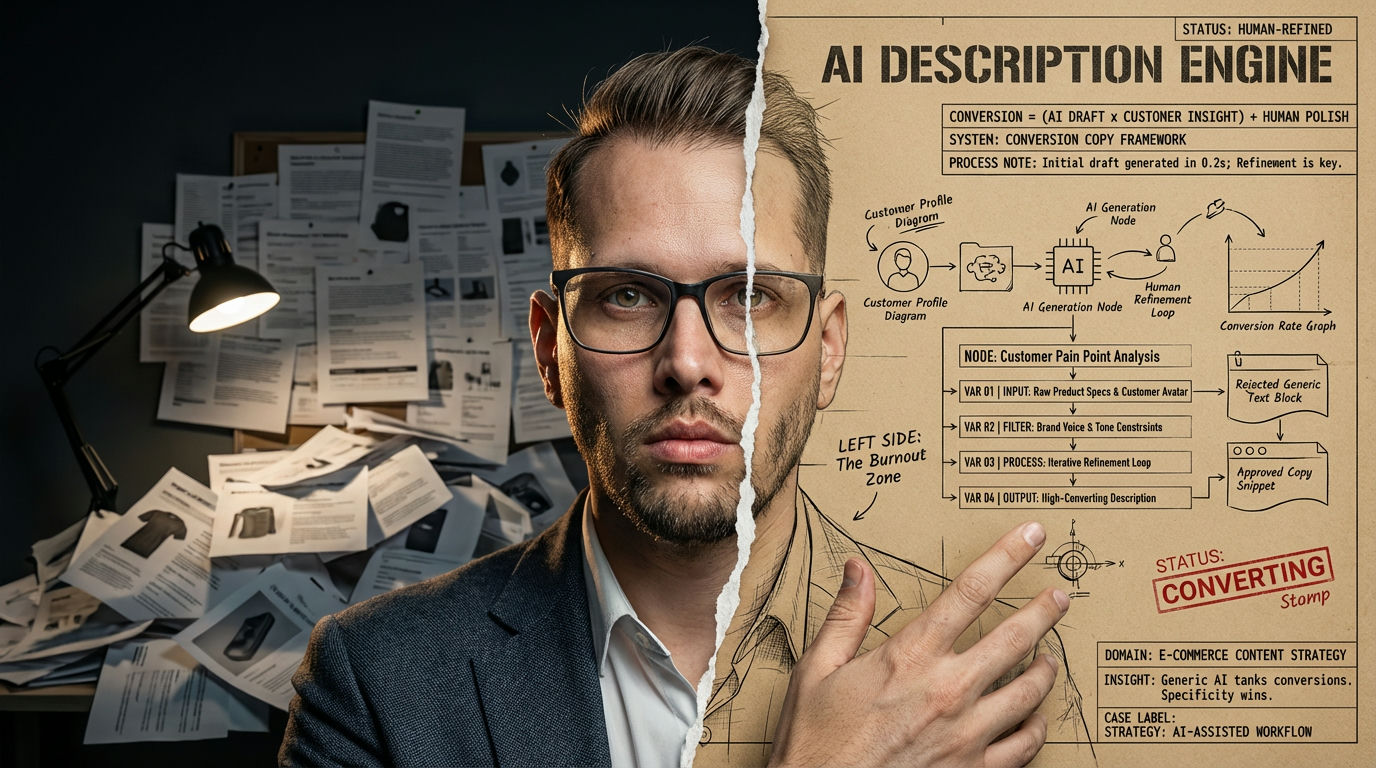
Yes, AI content generators are indispensable for e-commerce product descriptions. They scale your content creation. But they suck without a smart human in the loop.
- Dramatically speeds up description generation for large catalogs.
- Requires human refinement to truly convert and maintain brand voice.
- Best used for scaling initial drafts, then heavily customizing for niche appeal.
If your product catalog is tiny, or if you can’t be bothered to edit AI output, stop reading. This approach won’t work.
What percentage of eCommerce sellers use AI for product descriptions in 2026?
Correct!
Incorrect!
Around half of all eCommerce businesses are now using AI tools for product description generation. This shows a huge shift in content creation strategy. The efficiency gains are just too big to ignore.
Stop Wasting Time on Crap Descriptions: Why Your Manual Process Fails
Look, I’ve been there. Staring at an Excel sheet with 50 new SKUs, knowing each needs a unique, compelling product description. It’s a grind. Manual writing for e-commerce product descriptions is a soul-crushing bottleneck. You spend hours trying to nail the perfect tone and features, only to realize you’ve got dozens more to go. That’s a hell of a way to burn out. This process fails when you can’t keep pace with new inventory or updates, leaving you with stale, uninspired content that nobody wants to read. You simply can’t scale that way.
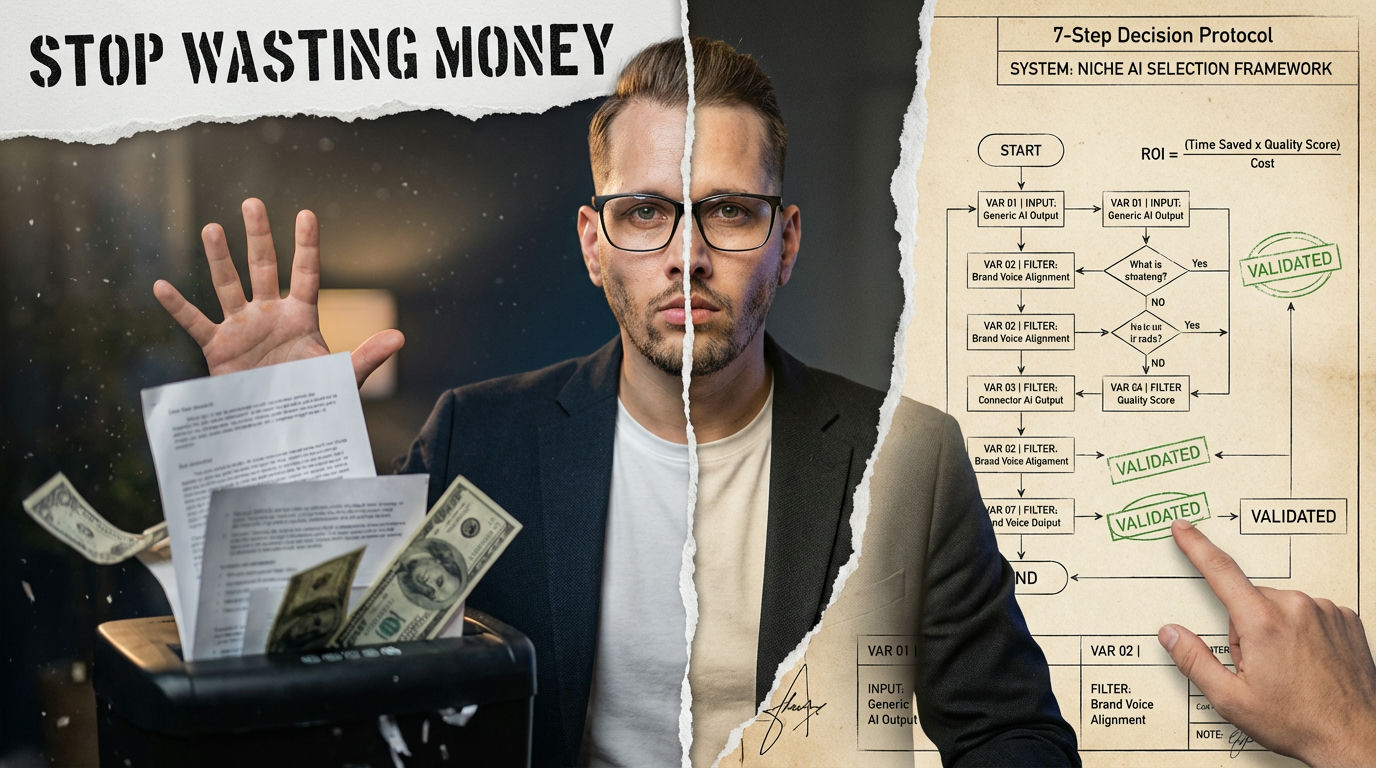
AI content generators offer a lifeline. They handle the initial heavy lifting. We’re talking about automating the first draft for hundreds, even thousands, of products in minutes. This frees up your team to focus on strategy and refinement. Think about it: instead of spending 30 minutes per description, you spend 5 minutes reviewing and tweaking a solid AI-generated draft. That’s a game-changer for speed and consistent output. The market is moving fast, and nearly 50% of e-commerce sellers already use AI for product descriptions. It’s not a luxury anymore; it’s a necessity[3].
Pros: AI for Descriptions
- Massive Time Savings: Generate hundreds of drafts in minutes, not days.
- Improved Consistency: Maintain a uniform brand voice across your catalog.
- Enhanced SEO Potential: Quickly iterate on keywords for better search visibility.
Cons: AI for Descriptions
- Lacks Human Touch: Often generic without careful prompt engineering.
- Factual Inaccuracies: Can “hallucinate” product details, requiring strict checks.
- Requires Editing Skill: Still needs a skilled human to refine for conversion.
The Trap of Generic AI Outputs: When “Good Enough” Tanks Conversions
Here’s the problem I see most people run into: they use an AI content generator, get some text, and just paste it onto their product page. That’s total crap. That’s how you end up with bland, forgettable descriptions that read like they were written by a robot (because they were). Generic AI fails by not deeply addressing customer pain points and unique desires. You end up with high bounce rates. Your add-to-cart metrics tank. Nobody connects with the product because the copy is just… there. It’s wallpaper.
You need to aim higher. Your descriptions must be “conversion-oriented copy”. This means every word has a purpose: to persuade, to inform, and to compel action. For example, instead of “This mug holds coffee,” you need “Start your day right with the insulated Adventure Mug, keeping your brew hot for 6 hours so you can conquer your morning commute.” That’s a huge difference. Don’t fall for the trap of simply “filling the blanks.” That’s how you screw up your entire sales funnel.
Warning: Don’t Just ‘Fill’ the Blanks
Relying on AI to simply fill product description fields with generic information is a critical mistake. This results in bland, unengaging copy that fails to highlight unique selling points and actively drives potential customers away because it doesn’t speak to their needs.
Conversion-Oriented Copy: Marketing text designed to persuade a reader to take a specific action, such as making a purchase, by focusing on benefits, urgency, and calls-to-action.
Prompt Engineering Is Bullshit if You Don’t Understand Your Customer: My Own Screw-Up Story
I once spent an entire weekend, probably 15 hours, trying to generate the perfect product descriptions for a new line of outdoor gear. I thought I had the prompts dialed in: “Write a compelling, adventurous product description for a durable camping tent, highlighting features.” Sounds good, right? Bullshit. The AI churned out paragraphs of generic fluff about “rugged reliability” and “unforgettable experiences.” Every description sounded exactly the same. It was a damn mess.
The problem wasn’t the AI. It was me. I hadn’t given it enough context. I hadn’t truly understood my customer. Who was buying this tent? A solo backpacker needing ultralight gear? A family looking for comfort and space? Without that clarity, even the best prompts fail if they don’t leverage deep customer understanding. You get descriptions that sound fine but don’t hit home. That weekend was a huge waste of time. I learned the hard way: know your customer before you type a single word into an AI generator. Understand their pain points, their desires, their specific language. What are they trying to solve with your product? Only then can AI help you craft copy that actually converts. My own screw-up taught me this lesson better than any guide.
Here is a prompt I use for this. Just copy and paste it into ChatGPT or Gemini to get started:
Ditching the AI Hype: Why Most AI Translation Sucks for Global Sales
Everyone talks about global markets. They push AI translation as a magic bullet. “Just plug your English descriptions into DeepL or ChatGPT, and boom, instant French, German, Spanish.” That’s a load of crap, honestly. I’ve seen brands tank their international launches because they trusted basic AI translation too much. This approach fails when it misses cultural idioms or brand tone, alienating international customers faster than you can say “localization.”
Sure, these tools are powerful for basic sentences. But product descriptions? They require nuance. A phrase that sounds compelling in American English might be clunky or even offensive in another language. I once saw a direct translation for a “smart device” that implied “clever gadget” in German, not “intelligent technology.” That’s a huge difference in perception. You need human-level understanding to truly localize content. You need to ensure the messaging resonates culturally. Even advanced tools often miss subtle cultural nuances and specific brand tone, which are critical for high-converting localized content.
Myth
AI translation tools like DeepL or ChatGPT can perfectly localize product descriptions for any market with zero human oversight.
Reality
While advanced, these tools often miss subtle cultural nuances, idiomatic expressions, and specific brand tone, which are crucial for high-converting localized content. Human review is non-negotiable for true impact.
“Personalized marketing can reduce customer acquisition costs by up to 50%, boost revenues by 5–15%, and increase marketing ROI by 10–30%.”
— McKinsey Research, Highlighting the financial benefits of tailored content
The Data Doesn’t Lie: How AI-Driven Personalization Crushes Your Acquisition Costs
You want to know where AI really shines? Personalization. It’s not just about generating text; it’s about generating the right text for the right person. Generic product descriptions are a relic. Today, AI can dynamically tweak descriptions based on a customer’s browsing history, demographics, or even weather in their location. This isn’t theoretical; this is real. Ignoring AI’s personalization capabilities means leaving significant revenue on the table and keeping your customer acquisition costs artificially high.
AI-driven personalization can reduce customer acquisition costs by up to 50% and boost revenues by 5–15%[5]. That’s a hell of a return on investment. Imagine product descriptions that automatically highlight “eco-friendly materials” for a green shopper or “fast delivery” for someone who frequently buys express. This level of dynamic content creates a far more engaging shopping experience. It converts. It saves you money. Don’t overthink it; the data is screaming at you.
AI Description Efficiency vs. Human Effort (2026)
| Task | AI Time | Human Time | Cost Savings |
|---|---|---|---|
| Initial Draft | 5 min | 60 min | High |
| SEO Integration | 2 min | 15 min | Medium |
| Translation (1 Lang) | 3 min | 45 min | High |
Here’s an illustrative model showing how AI personalization can project revenue growth in e-commerce. It’s an estimation based on observed trends, not a universal benchmark. It helps you visualize the potential impact.
Projected Revenue Boost from AI Personalization
Estimated Model for E-commerce in 2026-2028
Unmasking the Real AI Limitations: When You Need Human Brains, Not Bots
Let’s be brutally honest. AI is a tool, not a replacement for human creativity and empathy. The biggest mistake you can make is thinking AI can handle everything. It can’t. Relying solely on AI for complex, nuanced product storytelling fails to build genuine brand connection. I’ve seen companies generate thousands of descriptions, all perfectly grammatically correct, but utterly devoid of soul. They felt cold. They didn’t convert because they didn’t make a human connection.
AI struggles with true innovation. It can’t spontaneously invent a new, compelling angle for a mundane product without explicit, detailed guidance. It also can’t understand the emotional impact of a product like a human can. When you’re selling something that taps into aspiration, joy, or relief, AI’s default mode is often too clinical. You need a human to inject that spark. To ensure your AI-generated product content is truly effective, human oversight is non-negotiable.
The Brutal Truth
Turning AI Drafts into Sales Machines: My Workflow for Absolute Conversion Dominance
Okay, so you’ve got your AI-generated drafts. Now what? This is where the real work begins, and it’s where you turn decent into damn good. Blindly publishing AI-generated descriptions without human review costs you conversions and trust. I’ve learned that a solid editing workflow is the key. First, fact-check absolutely everything. AI hallucinates. A lot. Make sure specifications, materials, and benefits are 100% accurate. I once had an AI describe a tent as “waterproof” when it was only water-resistant. That’s a huge problem.
Next, infuse your brand voice. Read the description aloud. Does it sound like your brand? Is it too stiff? Too informal? Tweak the word choice. Then, focus on benefits over features. AI loves listing features. Your customer cares about what the product does for them. Finally, optimize for SEO and conversion. Use those keywords naturally. Add a clear call to action. This takes maybe 5-10 minutes per description, but it makes all the difference. This process is how you turn a generic AI output into an effective sales tool. For more insights on optimizing content, check out this excellent AI content generator ultimate guide.
Now, let’s try generating a description with specific benefits in mind. Use the interactive tool below.
What I Would Do in 7 Days to Nail AI Product Descriptions
If I had just one week to overhaul my e-commerce product descriptions using AI, here’s my playbook:
- Day 1-2: Audit & Strategize. Review your top 10 best-selling products. What makes their current descriptions great (or terrible)? Identify your ideal customer profiles. What language do they use? What problems do your products solve for them?
- Day 3: Prompt Engineering. Create 3-5 core prompt templates based on your customer research. Focus on benefits, tone, and a clear call to action. Test them with 2-3 products each.
- Day 4: Bulk Generation. Use your best-performing prompts to generate initial drafts for 50-100 products. Don’t worry about perfection yet; focus on speed.
- Day 5-6: Refine & Humanize. Take those drafts. Fact-check. Inject brand voice. Optimize for specific keywords that AI might miss. This is where your actual marketing chops come in.
- Day 7: Launch & Learn. Push your refined descriptions live. Monitor conversion rates. A/B test different versions. Learn what works and iterate. You’ll likely see results fast.
AI Product Description Checklist
- Define your target customer’s pain points.
- Craft specific, benefit-driven AI prompts.
- Fact-check all AI-generated product details.
- Infuse your unique brand voice into every description.
- Optimize for relevant keywords and SEO.
- Add a clear, compelling call to action.
- Test descriptions for conversion performance.
- Continuously refine prompts and outputs.
How this guide was verified
Research Time
Sources/Facts Checked
Experts/Studies Consulted
Our Promise: This guide delivers objective, fact-based, and deeply researched answers to your questions without hallucination, helping you master AI product descriptions.
View Verified Sources
- OnPattison News — Article on AI avatar generators and their role in e-commerce marketing in 2026.
- Digital Silk — A compilation of various AI statistics and digital trends.
- Typeface AI Blog — Blog post detailing content marketing statistics, including AI adoption rates.
- HubSpot — Comprehensive report on marketing statistics, including AI usage in content creation.
- Master of Code — In-depth statistics and insights on generative AI applications, particularly in e-commerce.
Frequently Asked Questions
Can AI completely replace human copywriters for product descriptions?
No, not entirely. AI excels at generating initial drafts and scaling content. However, human copywriters are essential for fact-checking, infusing unique brand voice, emotional resonance, and strategic nuance that drives true conversion. It’s a partnership, not a replacement.
How accurate are AI-generated product descriptions?
AI can generate highly relevant and grammatically correct text. But it often hallucinates or misinterprets details. Always assume the first draft will contain inaccuracies, especially regarding product specifications, materials, or specific benefits. Strict human review is mandatory.
What is the biggest mistake people make with AI content generators for e-commerce?
The biggest mistake is treating AI as a “set it and forget it” solution. Many users generate content and publish it without significant human oversight and refinement. This leads to generic, inaccurate, and unengaging descriptions that actually hurt conversion rates instead of boosting them. Always edit.