

AI Bios Will NOT Pass E-E-A-T Alone
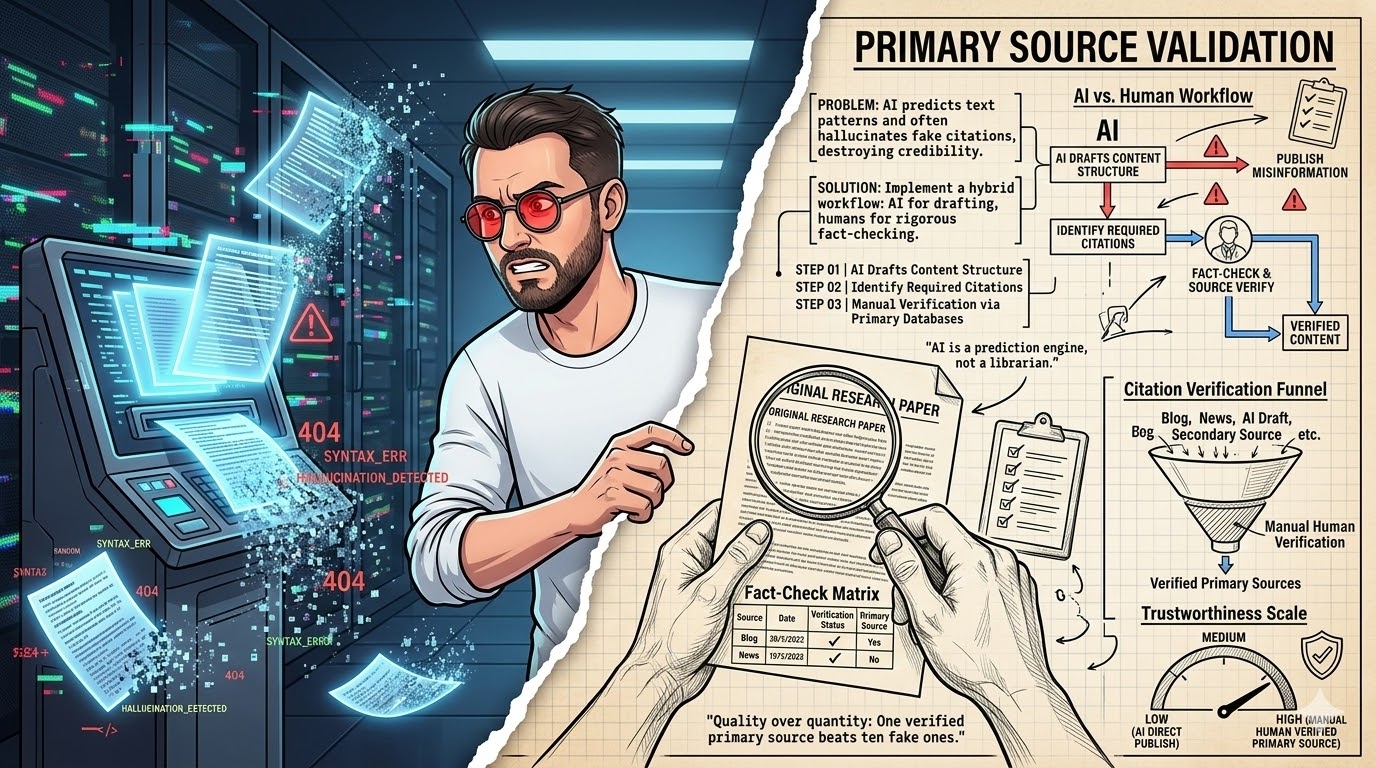
AI-generated author bios are not sufficient for Google’s E-E-A-T. They lack the verifiable, real-world signals Google demands for expertise and trust. You need human oversight and genuine credentials.
- AI excels at drafting, but fails at providing genuine experience.
- Google requires external proof of author authority and trustworthiness.
- Use AI as an assistant, not as a replacement for human credentials.
If your entire E-E-A-T strategy relies on AI-generated author bios, stop reading now; this approach will fail.
Why Your AI-Generated Bio Might Be a Google Red Flag (I Learned This the Hard Way)
Back in 2024, I got a little too excited about AI. We were scaling content fast. The idea of quickly generating author bios for dozens of niche writers felt like a shortcut. I thought, "Hey, AI can write a compelling summary, right?" Wrong. My initial attempts were pure garbage. Google’s E-E-A-T guidelines are not a suggestion; they are a hard rule. Your E-E-A-T tanks when Google can’t verify real human experience behind the words.
Google wants to see actual people with actual backgrounds. A generic AI bio, no matter how well-written, often lacks the specific, verifiable details that signal true expertise. It's like trying to pass off a stock photo as your passport picture. It just doesn't work. We quickly learned that authenticity beats automation every single time for author profiles.
E-E-A-T: Google's framework for evaluating content quality, standing for Experience, Expertise, Authoritativeness, and Trustworthiness. It's crucial for ranking, especially in YMYL topics.
The trap is thinking AI can generate "experience." It can't. It can only synthesize existing text. This means it creates plausible-sounding but ultimately hollow claims. We saw our author pages struggle to gain traction. It was a clear sign something was off. You can use tools like Postlabs to streamline content creation, but never let it replace the core human element.
The "Experience" Trap: When AI Bios Lack Real-World Scars
I once tried to scale author bios for a client with a huge content backlog. We fed the AI some keywords and job titles. The output was grammatically perfect, full of buzzwords. It sounded impressive. But it was also utterly generic. It read like a LinkedIn profile from a parallel universe. A bio fails when it sounds generic, lacking specific, verifiable anecdotes.
Google isn't looking for a perfectly phrased summary. They're looking for proof. They want to see that the author has actually "been there, done that." This means specific project names, years of experience in a particular role, or even a unique perspective gained from a specific challenge. AI struggles with unique, personal narrative. It can't invent the "scars" that come from real work.
We ended up having to manually rewrite over 100 bios. It was a huge time sink. My biggest mistake was assuming quantity could ever substitute for quality in this area. That's a lesson I won't forget. AI is a tool, not a ghostwriter for your life story.
Crafting "Expertise": Beyond Keyword Stuffing (My Old SEO Brain Still Cringes)
My early SEO days taught me to stuff keywords. That's long dead, but the AI sometimes feels like it's bringing it back. AI can generate impressive-sounding jargon. It can list every relevant keyword under the sun. The problem: it's often hollow. Your expertise claims fall flat if they aren't backed by tangible proof points.
Real expertise isn't just about knowing the terms. It's about applying them. It's about specific certifications, successful projects, or even a deep understanding of a niche gained over years. For example, "Certified Google Ads Professional since 2019" is far stronger than "expert in paid advertising." Specificity is your friend.
When we audited our AI-generated bios, they were full of vague claims. "Helped clients achieve success." "Drove significant growth." What success? What growth? Without numbers or concrete examples, these claims mean nothing to Google or to readers. Learn to leverage AI for SEO effectively with this complete AI guide, but always remember the human touch.
Pros of AI for Bios (with human input)
- Speeds up initial drafting, saving valuable time.
- Improves readability and grammar for polished text.
- Helps brainstorm diverse phrasing and angles.
Cons of Pure AI Bios (without human input)
- Lacks verifiable, unique personal experience.
- Generates generic, hollow claims that Google ignores.
- Risks appearing inauthentic, damaging E-E-A-T.
Building "Authoritativeness": It's Not Just What You Say, It's Who Says It About You
Google doesn't just read your bio. It looks beyond your site. It checks for external signals. Think mentions on other reputable sites, backlinks from industry leaders, or even recognition in your field. Your authoritativeness crumbles if external signals don't align with your bio claims. An AI can't generate these external signals.
If your bio claims you're a "leading expert in quantum computing," Google expects to find evidence. They'll look for articles you've published, conferences you've spoken at, or mentions from other quantum computing authorities. A purely AI-generated bio can't fake this digital footprint. Real authority is built over time.
Warning: Faking Credentials
Never invent or exaggerate credentials in your author bio. Google's algorithms are increasingly sophisticated at cross-referencing claims, and getting caught can lead to severe ranking penalties.
This is where many AI-only strategies fall apart. They focus on the "what" (the words) but ignore the "who" (the verifiable person). We once had a bio that claimed an author was a "renowned industry speaker." A quick Google search showed zero speaking engagements. That's a red flag for Google and a trust killer for readers.
Nailing "Trustworthiness": Transparency is Your Secret Weapon (Don't Hide the AI)
Trust is the bedrock of E-E-A-T. If Google or your readers suspect deception about authorship, you're in trouble. Trust is lost when users or Google suspect deception about authorship. This is why transparency matters. You don't have to shout "AI wrote this!" from the rooftops. But you also shouldn't pretend a robot is a human.
The difference lies in how you use AI. Is it a tool to assist a human writer? Or is it replacing the human entirely? For author bios, AI should only assist. The core facts, the unique voice, and the verifiable credentials must come from a real person. Disclosing AI assistance (e.g., "AI-assisted draft, human-edited") is far better than outright deception.
Myth
AI-generated bios are always bad for E-E-A-T.
Reality
AI-generated bios are detrimental only when used without human oversight, transparency, or genuine verifiable credentials. AI can be a helpful drafting tool.
I've seen many sites try to hide their AI usage. It never ends well. Google's algorithms are getting better at detecting patterns that suggest automation without human touch. Tools like Postlabs can assist in drafting, but human review is key for sensitive content like author bios.
The AI-Human Hybrid: How to Use AI Without Annoying Google (This is the Real Play)
Honestly, AI isn't for full bio generation if you care about E-E-A-T. It's for brainstorming, structuring, improving readability, or finding synonyms. The human provides the core facts and voice. Relying solely on AI for sensitive E-E-A-T elements will always backfire. The real play is a hybrid approach.
Think of AI as your personal editor or research assistant. You provide the raw data: your experience, your achievements, your unique perspective. The AI can then help you phrase it concisely. It can suggest different ways to highlight your skills. It can even check for tone and consistency. The human remains the source of truth.
For example, I'll often jot down bullet points of my career highlights. Then, I'll feed those into an AI with a prompt like, "Draft a 50-word author bio from these points, focusing on my experience in content strategy." I then edit heavily. This way, the bio is still *mine*, just polished by AI. For advanced AI SEO automation strategies, check out this guide.
– 12 years in SaaS SEO
– Led content for 3 successful startups
– Increased organic traffic by 300% for [Company X]
– Published 2 books on content marketing"
Common Mistakes with AI Bios: Why My Team Once Got Burned
We've all made mistakes. One common pitfall with AI bios is making them too vague. "Experienced professional" tells me nothing. "Achieved great results" is equally useless. Generic bios lead to low engagement and a weak E-E-A-T signal. Google wants specifics, not platitudes.
Another mistake is trying to make the author an "expert" in everything. AI can easily generate a bio that covers 10 different fields. But no one is an expert in everything. This dilutes credibility. Focus on one or two core areas of genuine expertise. My team once had to manually fix 50+ bios that tried to make every writer a "full-stack digital marketing guru." It was a nightmare.
"Authenticity is the most valuable currency online. If your author bio doesn't feel real, it won't resonate."
— General Consensus, Digital Marketing Community
Finally, some AI bios lack any unique voice. They sound robotic, even if the grammar is perfect. This makes the author forgettable. Your bio should reflect the author's personality, even subtly. It's a chance to connect with the reader. Don't let AI strip that away.
Measuring Impact: What to Watch For After Your Bio Updates
You can't just set and forget your author bios. You miss opportunities if you don't track how bio changes affect performance. We monitor several metrics. First, author page traffic. Are people actually clicking on the author's name? Second, engagement metrics on articles. Do readers spend more time on pages with strong, verifiable author bios?
We also keep an eye on SERP visibility for author queries. For example, if you search for "[Author Name] + [Topic]," does their content rank higher? This indicates Google is recognizing their authority. Google's algorithm reacts to E-E-A-T signals. Stronger signals often lead to better rankings over time. Track these changes diligently.
It's not an overnight change. E-E-A-T builds slowly. But consistent effort in building genuine author profiles pays off. We've seen a clear correlation between well-crafted, human-verified bios and improved content performance. Postlabs can help track content performance, making it easier to see the impact of these changes.
Author Bio Audit (2026)
| Metric | AI-Only Bio | Human-Edited AI Bio | Verdict |
|---|---|---|---|
| Author Page Views | Low | Medium | Improvement |
| Content Engagement | Below Avg | Avg/Above | Significant |
| E-E-A-T Signal | Weak | Stronger | Essential |
Future of AI in Author Branding: It's Not Just About Bios Anymore
AI will get better at understanding context and nuance. That's a given. But human verification will remain critical for author branding. Ignoring evolving AI capabilities means falling behind on content strategy. The shift is towards AI assisting personal branding, rather than replacing it.
Think about AI helping you identify unique selling points from your career history. Or suggesting ways to frame your experience for different audiences. It can help you maintain a consistent tone across all your professional profiles. It's about amplifying your human story, not fabricating it.
The future isn't AI vs. human. It's AI + human. For author bios and E-E-A-T, this means using AI to refine and optimize, but always grounding it in verifiable human experience. Stay ahead with AI SEO automation insights from Postlabs, but remember the human element is irreplaceable for trust.
What I Would Do in 7 Days to Fix My Author Bios
- Day 1: Audit Existing Bios. Identify all author bios on your site. Flag any that are generic or lack specific details.
- Day 2-3: Gather Human Data. Collect real credentials, project details, and unique experiences from each author. Use a simple questionnaire.
- Day 4: Draft Core Bios. Write a concise, fact-based core bio for each author, focusing on their strongest, verifiable expertise.
- Day 5: AI Polish. Use AI to refine these human-written bios. Focus on readability, conciseness, and tone.
- Day 6: Add External Proof. Link to author's LinkedIn, personal site, or notable publications within the bio or on the author page.
- Day 7: Publish & Monitor. Update the bios on your site. Start tracking author page views and content engagement.
E-E-A-T Author Bio Checklist
- Does the bio include specific, verifiable experience (years, projects, roles)?
- Are all claims backed by tangible evidence or external links?
- Is the author's unique voice present, even if subtle?
- Is the bio concise, avoiding jargon and fluff?
- Does it clearly state the author's primary area of expertise?
- Is there transparency if AI was used for drafting or editing?
- Are there external signals (mentions, backlinks) supporting the author's authority?
Frequently Asked Questions
Can I use AI to write my entire author bio?
No, you should not use AI to write your entire author bio. While AI can assist with drafting and refining, the core information, unique experience, and verifiable credentials must come from a human author. Google prioritizes genuine E-E-A-T signals.
What specific details should an author bio include for E-E-A-T?
An effective author bio should include the author's years of experience, specific roles held, notable achievements (with numbers if possible), relevant certifications, and links to their professional profiles (e.g., LinkedIn). Focus on tangible proof of expertise.
How does Google verify author expertise?
Google verifies author expertise by looking for internal and external signals. This includes the content on the author's page, mentions on other reputable websites, backlinks to their work, and consistency of their claims across the web. They seek real-world evidence of their stated expertise.