

Choose Programmatic SEO, Avoid AI Bulk Content
Do Programmatic SEO. Don’t do AI Bulk Content. Programmatic SEO builds a valuable asset. AI bulk content often creates disposable spam.
- Programmatic SEO offers scalable, defensible traffic.
- AI bulk content carries significant penalty risks.
- Focus on data-driven systems, not just raw output.
If your goal is quick, low-quality content for short-term gains, stop reading now. This guide is not for you.
Programmatic SEO vs. AI Bulk Content: The Core Differences
| Criterion | Programmatic SEO | AI Bulk Content |
|---|---|---|
| Use Case | Scalable content systems for specific queries. | Mass production of general articles. |
| Strengths | High relevance, data-driven, defensible. | Fast, low cost per article. |
| Limitations | Complex setup, requires data, slower to start. | Low quality, high penalty risk, generic. |
The Core Problem: Why Most AI Content Fails (I’ve Been There)
I once thought pumping out thousands of articles with basic AI would work. It felt like a shortcut. The trap is believing quantity beats quality, even with AI. My biggest mistake was ignoring the user intent behind each keyword.
This fails when you treat AI as a magic content generator. Google quickly spots generic, unhelpful content. You end up with a huge index of pages nobody wants to read. That’s a waste of time and server resources.
Most AI bulk content strategies fall flat because they lack a solid data foundation. They just generate text. They don’t solve a user’s problem. They don’t offer unique value. Google prioritizes helpfulness above all else.
Think about it. If every article on a topic sounds the same, why would Google pick yours? It won’t. You need a distinct angle. You need to answer questions better than others. This means more than just rewriting existing content.
A few years ago, I saw a site try this. They published 10,000 articles in a month. Traffic spiked, then crashed hard after a core update. They never recovered. It’s a classic example of chasing volume over value. That’s not a sustainable business model.
The real issue isn’t AI itself. It’s how people use it. If you use AI to create more of the same, you’ll get the same poor results. AI is a tool, not a strategy.
Myth
AI can write high-quality, unique content on any topic at scale.
Reality
AI excels at generating text based on patterns. It struggles with true originality, deep insights, or nuanced understanding without significant human guidance and data input. Raw AI output is often generic.
Programmatic SEO: Building Systems, Not Just Pages
Programmatic SEO isn’t about writing one article. It’s about creating a system. This system generates hundreds or thousands of pages. Each page targets a specific, long-tail keyword. It uses structured data to fill in unique details.
Your programmatic efforts fail when you lack a robust data source. Without unique data, your pages become generic. They offer no distinct value. This makes them indistinguishable from AI bulk content.
Think of it like this: you’re building a content factory. Each product (page) is tailored. It uses a template. But the specific details come from a database. This could be product specs, city data, or comparison points. The data is your differentiator.
I once built a site for local service providers. We had a database of cities and services. The system generated pages like "Best Electrician in [City Name]" or "[Service Name] in [City Name] Reviews." Each page was unique because the city and service data changed. The core template stayed the same.
This approach lets you target thousands of niche keywords. These keywords often have lower search volume. But they have high intent. The cumulative traffic from these pages can be massive. It’s a long game, but a powerful one. You’re building an asset.
The setup takes time. You need to identify your data. You need to design your templates. You need to connect everything. But once it’s running, it scales efficiently. You can use Postlabs for AI SEO automation to streamline this process. It helps manage the content generation and optimization.
Programmatic SEO: A strategy that uses structured data and templates to automatically generate a large volume of unique, highly targeted web pages, each optimized for specific long-tail keywords.
Pros of Programmatic SEO
- Achieve massive scale with unique, targeted content.
- Capture high-intent, long-tail search traffic effectively.
- Build a defensible asset that’s hard to replicate.
Cons of Programmatic SEO
- Requires significant upfront data and technical setup.
- Initial content creation can be slow and complex.
- Poor data or templates lead to generic, low-value pages.
AI Bulk Content: The Fast Lane to Google’s Penalty Box
AI bulk content is the opposite of programmatic SEO. It focuses on speed and volume. The goal is to generate as much text as possible. Often, this means using AI to write articles on broad topics. There’s little to no unique data input. It’s just generic text generation.
This strategy fails when Google’s algorithms detect low-value content. And they will. Google’s systems are designed to identify unhelpful pages. Your site risks de-ranking or even de-indexing. This can happen quickly after an update.
I’ve seen sites try to publish 500 articles a day using basic AI prompts. They just fed the AI a keyword list. The content was grammatically correct. But it lacked depth. It offered no new insights. It was just rehashed information. This is a recipe for disaster.
Google’s Helpful Content System (HCS) is always improving. It looks for content created primarily for search engines. It penalizes content that doesn’t genuinely help users. AI bulk content often falls squarely into this category. It’s not written for humans first.
The cost per article might be low. But the return on investment is often negative. You spend time and money creating content that gets no traffic. Worse, it can harm your entire domain’s authority. It’s like building a house on quicksand. It looks good for a moment, then collapses.
Many operators think they can outsmart Google. They believe they can hide their AI-generated content. But Google’s detection methods are sophisticated. They don’t just look for AI watermarks. They analyze user engagement, bounce rates, and overall helpfulness. Don’t play games with your domain’s health.
Warning: High Risk of Penalties
Relying solely on AI for bulk content generation is a critical mistake. This approach often leads to low-quality, unhelpful pages that Google’s algorithms will penalize, potentially de-ranking your entire site.
The Data Layer: Your Programmatic SEO Superpower
Here’s the thing: programmatic SEO isn’t just about templates. It’s about the data you feed those templates. This data makes each page unique. It gives your content authority. Without a strong data layer, your programmatic efforts will fall flat.
Your programmatic SEO will fail if your data is generic or incomplete. If every page pulls from the same shallow dataset, it won’t stand out. Google needs to see unique value on each page.
I once worked on a project comparing software tools. Instead of just listing features, we collected specific pricing tiers, integration options, and user reviews for each tool. We built a database. Then, we generated comparison pages like "[Tool A] vs. [Tool B]" or "[Tool C] Alternatives." Each page pulled unique data points. This made them genuinely helpful.
This data can come from many places. It could be public APIs, scraped data (ethically, of course), internal databases, or even user-generated content. The key is that it’s structured. It’s organized. It’s something you can plug into a template.
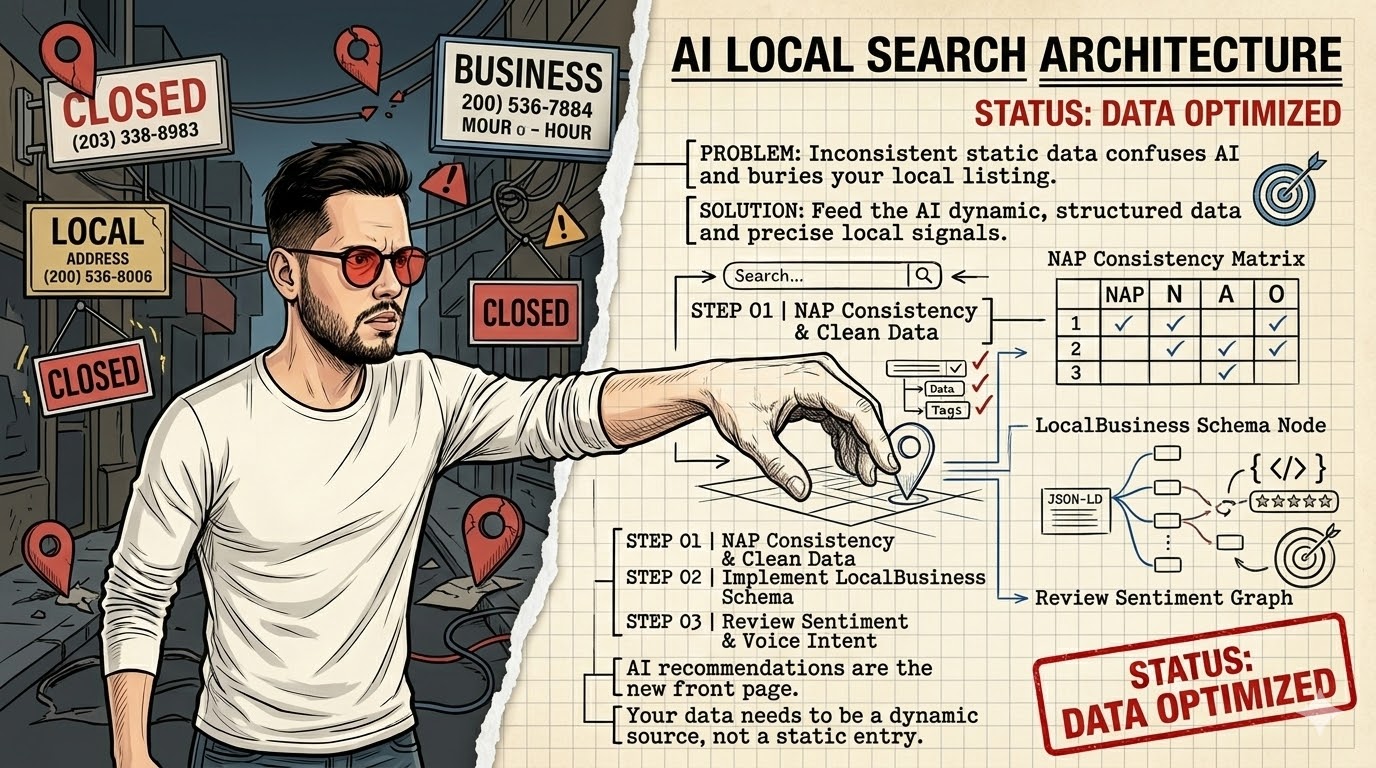
For example, if you’re building a local business directory, your data layer would include: business name, address, phone number, services offered, opening hours, and maybe even average rating. Each piece of data makes a page for "Plumbers in [City X]" different from "Plumbers in [City Y]." This is where the magic happens.
Investing in data collection and structuring is crucial. It’s more important than the AI model you use. The AI just writes the sentences. The data provides the facts. A complete AI guide, like the one from Postlabs, emphasizes data-driven approaches. It’s about smart AI integration, not just raw output.
<p>Looking for a reliable [Service] in [City]? We’ve compiled the top-rated providers.</p>
<h2>Top [Service] Providers in [City]</h2>
<ul>
<li><strong>[Provider Name 1]</strong> – Specializes in [Specialty 1]. <em>Contact: [Phone 1]</em></li>
<li><strong>[Provider Name 2]</strong> – Known for [Specialty 2]. <em>Contact: [Phone 2]</em></li>
</ul>
<p>Our data for [City] includes [Number] providers. We update this data monthly.</p>
<!– Data fields to populate: Service, City, Provider Name, Specialty, Phone, Number –>
Choosing Your Battleground: Niche Selection for Scale
Picking the right niche is paramount for programmatic SEO. You can’t just apply this strategy anywhere. You need a niche with specific characteristics. It needs a high volume of similar, yet distinct, search queries. And it needs accessible, structured data.
Your niche selection fails if there isn’t enough structured data available. If you can’t find unique data points for thousands of variations, you can’t scale. You’ll hit a wall quickly.
I once saw someone try programmatic SEO for abstract art. The problem? There wasn’t enough structured data to differentiate thousands of pages. Each page ended up being too similar. It was a struggle to find unique angles. The project never really took off. Data availability is non-negotiable.
Look for niches where users search for variations of a core topic. Think "best [product] for [use case]" or "[software] alternatives for [industry]." These patterns are perfect. Each bracket represents a data point. Each combination creates a unique page.
Consider the competitive landscape too. If the top 10 results for your target queries are all massive authority sites, it’s harder. Look for areas where smaller sites are ranking. This suggests an opening. It means Google is still looking for better answers.
A good starting point is often a niche you already know. Or one where you have access to unique data. This could be an internal product catalog. Or a list of local businesses. Leverage what you already have. This reduces the initial barrier to entry. It makes the whole process smoother.
Content Generation: Smart AI Integration vs. Dumb Blasting
This is where AI truly shines, but only if used correctly. Smart AI integration means using AI to enhance your programmatic templates. It’s not about letting AI write everything. It’s about using it for specific, targeted tasks within your structured content.
Your AI content generation fails when you give the AI too much freedom. If you just ask it to "write an article about X," you get generic output. You lose control over quality and uniqueness. The content becomes indistinguishable from mass-produced spam.
I use AI to fill in specific sections of my templates. For example, I might have a template for product reviews. The data layer provides the product name, features, and specs. Then, I use AI to write a concise "pros and cons" section. Or a "who is this for" paragraph. I give it very specific instructions. The AI operates within tight guardrails.
This approach ensures consistency. It maintains quality. And it leverages AI’s speed without sacrificing helpfulness. You’re still the editor. You’re still the strategist. The AI is just a very fast assistant. This is a core principle taught in any complete AI guide for SEO. It’s about augmenting, not replacing.
Think about using AI for summarizing data points. Or for generating unique introductory paragraphs based on specific data. Or even for creating meta descriptions. These are tasks where AI excels. It can process information quickly and rephrase it. But the core structure and unique data come from you.
Don’t just hit "generate." Craft detailed prompts. Provide context. Give examples. Treat the AI like a junior writer who needs clear instructions. This makes a huge difference. Specific prompts yield specific, better results.
"AI is a powerful amplifier. It amplifies good strategy and bad strategy equally. Choose wisely."
— General Consensus, AI SEO Best Practices
Quality Control: The Human Touch Programmatic SEO Needs
Even with the best data and templates, human oversight is critical. Programmatic SEO isn’t a "set it and forget it" system. You need to review samples. You need to monitor performance. You need to make adjustments.
Your programmatic system fails if you skip the human quality control step. AI can make mistakes. Data can be outdated. Templates can have flaws. Without human review, these issues compound. They lead to a flood of low-quality pages.
I’ve seen systems generate thousands of pages with a subtle error. Maybe a pricing field was wrong. Or a city name was misspelled consistently. If no human checks, those errors propagate across the entire site. Fixing it later is a nightmare. Regular spot checks are essential.
This doesn’t mean manually reviewing every single page. That defeats the purpose of scale. Instead, sample pages regularly. Pick 5-10 random pages each week. Read them. Check for accuracy. Look for grammatical errors. Ensure they sound natural.
Also, monitor your analytics. Look at bounce rates for your programmatic pages. Check time on page. If these metrics are poor, it’s a sign something is off. It means users aren’t finding the content helpful. This feedback loop is crucial for refinement.
Consider hiring a junior editor or a virtual assistant for this task. Train them on your quality standards. It’s an investment that pays off. It prevents major issues. It ensures your programmatic content remains high quality. Don’t underestimate the power of a human eye.
Programmatic SEO Audit (2026)
| Project/Item | Cost/Input | Result/Time | ROI/Verdict |
|---|---|---|---|
| Data Layer Build | $1,500 (1 week) | 5,000 data points | High Value |
| Template Design | $800 (3 days) | 3 core templates | Essential |
| AI Content Gen | $200/month | 1,000 pages/month | Scalable |
Monetization Models: Making Your Scalable Traffic Pay
Generating traffic is one thing. Making money from it is another. Programmatic SEO excels at attracting highly specific, long-tail traffic. This traffic often has high commercial intent. But you need the right monetization model to capitalize on it.
Your monetization strategy fails if it doesn’t align with user intent. If your pages answer a specific question, but you only show generic display ads, you’re leaving money on the table. The user is looking for a solution, not just information.
I’ve seen programmatic sites thrive with affiliate marketing. For example, a site generating "best [product] for [problem]" pages. Each page recommends specific products. Users are often ready to buy. They just need a trusted recommendation. Affiliate links convert well here.
Another strong model is lead generation. If your programmatic pages target local services, you can collect leads. "Best plumber in [City X]" pages can funnel users to a contact form. You then sell those leads to local businesses. This is a very direct way to monetize high-intent traffic.
Information products also work. If you’re creating thousands of "how-to" guides, you can sell a related ebook or course. The programmatic content acts as a funnel. It attracts users interested in a specific problem. Your product offers a deeper solution.
Even display ads can work, but they should be secondary. Focus on higher-value monetization first. Think about the user’s journey. What are they trying to achieve? How can your site help them achieve it, and how can you get paid for that help? Align monetization with user intent.
Insider tip
I always start with the monetization model in mind. Before building any programmatic system, I ask: "How will each page make money?" This shapes the data I collect and the templates I design. It’s about building for profit, not just traffic.
Future-Proofing: Adapting to Google’s Ever-Changing Game
Google’s algorithms are always evolving. What works today might not work tomorrow. Programmatic SEO, when done right, is more resilient than AI bulk content. But it still requires vigilance. You need to build a system that can adapt.
Your programmatic efforts will fail if you build a rigid system. If your templates or data sources cannot be easily updated, you’re in trouble. Google will eventually catch up, and you won’t be able to pivot.
I remember when Google started cracking down on thin content. Sites with generic, auto-generated pages got hit hard. My programmatic sites, with their unique data, largely survived. Why? Because the core value was in the data, not just the text. But I still had to refine templates. I added more unique elements. Flexibility is key.
Regularly review Google’s guidelines. Pay attention to core updates. Understand what Google is trying to achieve. They want helpful, reliable content from experienced creators. Your programmatic system should aim for this. It means focusing on E-E-A-T (Experience, Expertise, Authoritativeness, Trustworthiness).
This might involve adding author bios to your templates. Or linking to authoritative sources within your data. Or even incorporating user reviews directly into your pages. These signals tell Google your content is trustworthy. They add a human element to your automated pages.
Don’t chase every shiny new SEO tactic. Focus on the fundamentals. Provide real value. Use AI as an enhancement, not a crutch. And always be ready to iterate. That’s how you build a sustainable asset in the long run. Adaptability ensures longevity.
<p>Written by <strong>[Author Name]</strong>, an expert in [Niche] with [Years] years experience. <a href="[Author Profile URL]">Learn more about [Author Name].</a></p>
</div>
<div class="sources-box">
<h3>Sources</h3>
<ul>
<li><a href="[Source URL 1]">[Source Title 1]</a></li>
<li><a href="[Source URL 2]">[Source Title 2]</a></li>
</ul>
</div>
<!– Data fields to populate: Author Name, Niche, Years, Author Profile URL, Source URL, Source Title –>
What I Would Do in 7 Days for Programmatic SEO
- Day 1-2: Niche & Data Identification. I would spend two days brainstorming niches. I’d look for those with high search volume for long-tail queries. I’d also check for readily available structured data. This means public APIs, government datasets, or existing product catalogs.
- Day 3: Data Structuring. I’d take my chosen data source and structure it. This means creating a spreadsheet or a simple database. Each row would be a unique page. Each column would be a data point.
- Day 4: Template Design. I would design 2-3 core content templates. These templates would use placeholders for my structured data. I’d focus on clear headings, helpful sections, and strong calls to action.
- Day 5: AI Integration & Prompting. I’d integrate AI into specific template sections. I’d write detailed prompts for AI to generate unique intros, pros/cons, or summaries. I’d ensure the AI uses the provided data.
- Day 6: Page Generation & Initial Review. I would generate a small batch of 50-100 pages. Then, I’d manually review at least 10-15 of them. I’d check for accuracy, readability, and overall helpfulness.
- Day 7: Launch & Monitoring Setup. I’d launch the first batch of pages. I’d set up analytics tracking. I’d also plan for ongoing monitoring and quality control. This includes regular spot checks and performance reviews.
Programmatic SEO Launch Checklist
- Have you identified a niche with abundant structured data?
- Is your data clean, accurate, and properly organized?
- Are your content templates designed for user helpfulness and uniqueness?
- Are AI prompts specific and constrained to avoid generic output?
- Have you performed a manual quality check on a sample of generated pages?
- Is your analytics tracking set up to monitor performance?
- Do you have a plan for ongoing data updates and template refinements?
Frequently Asked Questions
Can I use ChatGPT for programmatic SEO?
Yes, you can use tools like ChatGPT. However, you must integrate them carefully. Use them to fill specific template sections with data-driven prompts. Do not let them generate entire articles without strict guidance.
Is programmatic SEO still effective in 2026?
Absolutely. Programmatic SEO remains highly effective in 2026. This is especially true if you focus on unique data, user helpfulness, and continuous quality control. Google rewards systems that provide value at scale.
What’s the biggest risk with programmatic SEO?
The biggest risk is generating low-quality, generic content. This happens when your data is poor or your templates are too basic. Always prioritize unique value and human review to mitigate this risk.