

Optimize for SearchGPT. Ignore Google Search at your peril.
Optimize for both. Google Search still drives massive traffic. SearchGPT represents the future of information retrieval. You must adapt your strategy now.
- SearchGPT rewards deep, entity-rich content that answers complex queries.
- Traditional keyword stuffing actively harms your SearchGPT visibility.
- Leveraging AI tools can streamline content creation for both platforms.
If your entire business relies on exact match keyword rankings, stop reading. This shift will fundamentally change your approach.
Google Search vs. SearchGPT: The Core Differences
| Criterion | Google Search (Traditional) | SearchGPT (AI-Powered) |
|---|---|---|
| Use Case | Keyword matching, link signals, page authority. | Intent prediction, entity understanding, conversational answers. |
| Strengths | Broad reach, established ranking factors, direct clicks. | Contextual understanding, comprehensive answers, user satisfaction. |
| Limitations | Can be gamed, less semantic understanding, snippet focus. | Less direct traffic, answer attribution challenges, evolving metrics. |
The Core Shift: Intent vs. Prediction (My Old Strategy Failed Here)
I once spent weeks optimizing a client’s page for a broad query like "best project management software." With traditional Google Search, that meant hitting all the right keywords. It worked, for a while.
SearchGPT doesn’t just match keywords. It tries to predict your true intent. It understands the underlying entities and relationships. This means your content fails when it only targets broad keywords. It must satisfy complex, multi-faceted user needs.
Think about it. A user asking "best project management software" might actually want "agile tools for small remote teams." SearchGPT tries to figure that out. It then pulls information from various sources to build a comprehensive answer. This is where Postlabs comes in handy. It helps you map these complex intents.
You need to move beyond simple keyword density. Focus on covering a topic exhaustively. Provide answers to all related sub-questions. This signals authority and relevance to AI models. It’s a deeper game now. (Honestly, it’s more fun too.)
Pros of Optimizing for SearchGPT
- Higher User Satisfaction: Content directly answers complex queries, leading to better user experience.
- Future-Proofing: Aligns with the evolving landscape of AI-driven search engines and information retrieval.
- Increased Authority: Rewards comprehensive, entity-rich content, establishing your site as a go-to resource.
Cons of Optimizing for SearchGPT
- Reduced Direct Clicks: SearchGPT might provide answers directly, reducing traffic to your site.
- Complex Measurement: New metrics are needed to track success beyond traditional keyword rankings.
- Significant Content Overhaul: Requires a shift from keyword-focused to topic-focused content strategies.
Why Your Old Keyword Strategy Fails Now (I’ve Seen This Tank Traffic)
I remember a client who insisted on creating 50 variations of "best CRM for small business." We chased every long-tail keyword. That approach worked in 2020. Now, it’s a waste of time.
SearchGPT can synthesize information from many sources. It doesn’t need your exact long-tail phrase. Relying solely on exact match keywords will tank your visibility. SearchGPT looks for conceptual relevance and entity relationships. It’s a big shift.
The trap is thinking SearchGPT is just a smarter Google. It’s not. It builds answers. If your content is just a collection of keywords, it won’t be chosen. It won’t be seen as a comprehensive source.
Instead, focus on topics. Map out the entire knowledge graph around a core subject. What are all the related questions? What entities are involved? This is where a complete AI guide can really help. It teaches you to think like the AI. (Yeah, it’s a bit weird at first.)
Warning: The Keyword Stuffing Trap
Do not try to "stuff" your content with keywords for SearchGPT. This outdated tactic will be detected as low-quality. It will actively harm your chances of being featured in AI-generated answers. Focus on natural language and comprehensive answers instead.
The New Content Playbook: Depth Over Density
I once saw a competitor’s page. It was stuffed with 20 mentions of "content marketing strategy." It ranked well on old Google. SearchGPT would just ignore it. That kind of thin, keyword-stuffed content gets penalized. SearchGPT seeks comprehensive, authoritative answers.
Your goal is to become the definitive source for a topic. Answer every possible sub-question. Cover all angles. This means going deep. Don’t just skim the surface. Provide examples, case studies, and actionable advice.
Think of it like writing a mini-encyclopedia entry. But make it engaging. This signals to SearchGPT that you are an expert. It shows you have a full understanding of the subject. This approach builds trust with both users and AI systems. (It’s a lot more work, but worth it.)
This also means structuring your content logically. Use clear headings and subheadings. Make it easy for both humans and AI to parse your information. A well-organized page is a highly valuable page. This is a core tenet of AI SEO automation.
Entity-Rich Content: Content that thoroughly covers a specific concept or "entity" (person, place, thing, idea). It links related entities and provides comprehensive information. This helps AI models understand context and relationships.
Measuring Success: Beyond Rank Tracking (My Old Metrics Lied)
My team used to celebrate a #1 rank for a big keyword. We’d pop champagne. Now, a #1 rank might mean nothing if SearchGPT pulls your answer without a click. Focusing only on traditional keyword rankings is a trap. You need to track engagement and direct answer usage.
The game has changed. SearchGPT might present your information directly in an answer box. This means fewer direct clicks to your site. But it also means your brand is seen as authoritative. You need new metrics. Track "answer box impressions" or "direct answer visibility."
We also look at query satisfaction. Are users finding complete answers? Are they spending more time on related topics? These are better indicators of success. Don’t get hung up on old numbers. They don’t tell the whole story anymore. (Honestly, they never really did.)
Consider tracking entity coverage. How many related entities are you ranking for? How often is your content used in AI-generated summaries? These are the new KPIs. They show true topical authority. This is a key part of adapting your strategy for 2026.
Myth
"SearchGPT means the end of SEO as we know it."
Reality
SEO is evolving, not ending. It shifts from keyword manipulation to comprehensive content creation and entity optimization. It’s a new challenge, not a death knell.
The AI-Powered Advantage: Tools and Workflows
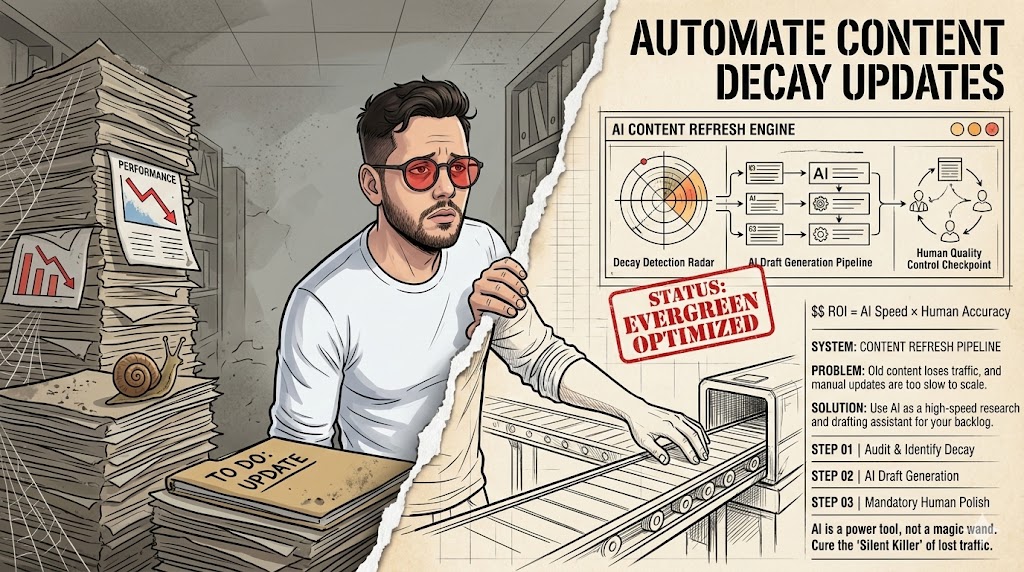
I used to spend 10 hours on topic research alone. I’d manually map out competitor content and related questions. Now, AI tools can map entire knowledge graphs in under an hour. Ignoring AI automation in your workflow means falling behind. Competitors are already leveraging it.
Tools like Postlabs can analyze vast amounts of data. They identify gaps in your content. They suggest related entities to cover. This saves massive amounts of time. It also ensures your content is truly comprehensive. You’re building for AI, with AI.
We use AI for content generation too. Not to write entire articles, mind you. But for outlines, first drafts, and summarizing complex research. It’s a powerful assistant. It frees up our human writers for the creative, nuanced parts. This is where the real value is added. (It’s a game changer, honestly.)
Integrating these tools isn’t optional anymore. It’s a necessity. It’s how you scale your content efforts. It’s how you stay competitive. The speed and depth of AI-assisted research are unmatched. This is the future of content creation. Embrace it.
"The future of search is conversational. Your content must be built to participate in that conversation, not just rank for a query."
— General Consensus, AI SEO Experts 2026
Building for the Future: Adapt or Die
I know a business that refused to adapt to mobile-first indexing. They’re gone. The same will happen if you ignore SearchGPT. Sticking to outdated SEO tactics guarantees irrelevance. The search landscape changes fast. You have to be agile.
This means continuous learning. It means experimenting with new content formats. It means understanding how AI models consume information. Don’t just wait for Google to announce changes. Anticipate them. Be proactive.
Your content strategy needs to be flexible. What works today might not work tomorrow. That’s not a scare tactic. It’s just reality. The businesses that thrive are the ones that adapt. They embrace new technologies. They don’t fight them. (It’s a marathon, not a sprint.)
Invest in your team’s knowledge. Train them on AI principles. Understand semantic search. This isn’t just about tools. It’s about a mindset shift. The future of search is here. You need to be ready for it.
Content Strategy Review (2026)
| Project/Item | Cost/Input | Result/Time | ROI/Verdict |
|---|---|---|---|
| Old Keyword Research | 80 hrs/month | Declining ranks | Negative |
| AI-Powered Topic Mapping | 10 hrs/month | Increased entity coverage | High |
| Comprehensive Content Creation | 40 hrs/article | Higher answer box visibility | Positive |
The User Experience: It’s Not Just About Answers
I once landed on a page that answered my question perfectly. But it was buried in ads and pop-ups. I left immediately. Even perfect answers won’t save a terrible user experience. SearchGPT values helpfulness and accessibility.
AI models are getting smarter. They can evaluate user signals. Page speed, mobile-friendliness, and clear content presentation matter more than ever. If your site is slow or hard to navigate, SearchGPT might de-prioritize your content. It’s about the full package.
Think about how a human would interact with your content. Is it easy to read? Is it visually appealing? Does it load quickly? These factors contribute to a positive user experience. They also send strong signals to AI systems. (It’s common sense, really.)
Clean code, logical structure, and minimal distractions are crucial. Don’t just focus on the text. Focus on the entire presentation. This ensures your valuable answers are actually consumed. It makes your content truly helpful. This is a core part of modern SEO.
What I would do in 7 days for SearchGPT
- Day 1-2: Audit Existing Content. Identify your top 10 performing pages. Analyze them for topical depth and entity coverage.
- Day 3: Research Key Entities. Use AI tools to map out related entities for your core topics. Find gaps in your current coverage.
- Day 4-5: Outline New Content. Create detailed outlines for 2-3 new, comprehensive articles. Focus on answering complex, multi-faceted queries.
- Day 6: Optimize for UX. Check your site’s mobile speed and readability. Fix any glaring issues.
- Day 7: Plan for AI Integration. Explore tools like Postlabs for AI SEO automation. Start integrating them into your workflow.
SearchGPT Readiness Checklist
- Have I identified my core entities and topics?
- Is my content comprehensive and authoritative?
- Am I using natural language, not keyword stuffing?
- Is my website fast and mobile-friendly?
- Am I tracking new metrics beyond traditional rankings?
- Am I leveraging AI tools for research and content generation?
- Do I have a plan for continuous adaptation?
Frequently Asked Questions
What is the biggest mistake people make when optimizing for SearchGPT?
The biggest mistake is treating SearchGPT like old Google Search. They focus on keyword density instead of topical authority and comprehensive answers. This leads to irrelevant content.
How can I ensure my content is "entity-rich"?
To be entity-rich, thoroughly cover a specific concept. Include all related sub-topics, questions, and relevant facts. Use internal and external links to connect related information. Think like an encyclopedia.
Will SearchGPT replace traditional Google Search entirely?
Unlikely in the near future. SearchGPT will likely augment traditional search, providing direct answers alongside traditional results. Optimizing for both offers the best strategy for 2026 and beyond.